
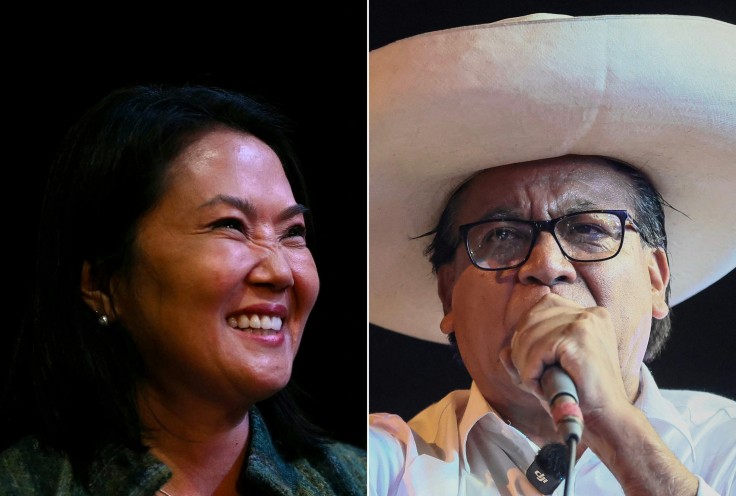
Peru's next president may be chosen not only in Lima, Cusco or the Andean highlands, but also in New Jersey, Madrid, Santiago, Buenos Aires and Tokyo.
With Keiko Fujimori and Roberto Sánchez locked in a razor-thin runoff, the vote from abroad has become one of the most watched pieces of the count. More than 1.2 million Peruvians living overseas were eligible to vote in the June 7 second round, a bloc large enough to matter in an election separated by only thousands of votes.
The stakes are especially high for Fujimori. Historically, Peruvians abroad have leaned more conservative and more anti-left than voters in rural Peru. In the 2021 runoff, overseas voters strongly favored Fujimori over Pedro Castillo, even as Castillo narrowly won the presidency with support from the Andes and rural regions. That pattern could repeat itself, though turnout abroad is often lower and slower to report.
Peru has one of Latin America's most politically important diasporas. According to Peru's National Institute of Statistics and Informatics, about 3.5 million Peruvians were living abroad as of mid-2024, representing more than 10% of the country's population. The largest communities are concentrated in the United States, Spain, Argentina, Chile, Italy and Japan.
They are not a single political tribe. Older migrants who left during the economic crisis and political violence of the 1980s and 1990s often carry memories of hyperinflation, the Shining Path insurgency and the authoritarian presidency of Alberto Fujimori, Keiko's father. For some, Fujimori remains the leader who restored order. For others, his name is inseparable from corruption, human rights abuses and the 1992 self-coup.
-
State Department Introduces $750 Fast-Track Visa Interviews Amid Processing Delays That Stretch for Months

-
Inside Nithya Raman's Campaign That Knocked Trump-Backed Spencer Pratt Out of the Los Angeles Mayor's Race

-
Lula Brands Marco Rubio 'Mortal Enemy' of Latin America as Trump Admin Targets Brazil With New Tariff Threats


Migration surged around the Fujimori years and accelerated afterward. Alberto Fujimori governed Peru from 1990 to 2000, a decade marked by economic shock therapy, internal conflict, institutional breakdown, and mass departures. Official migration studies using administrative records show that more than 3 million Peruvians left the country and did not return between 1990 and 2020. By 2000, academic estimates placed the Peruvian population abroad at around 2 million.
In the United States, the Peruvian diaspora is one of the most politically visible outside Latin America. The largest communities are concentrated in Florida, New Jersey, New York, California, Virginia, Maryland and Texas, with especially strong enclaves in South Florida, the New York metropolitan area and the Washington, D.C. suburbs. Many Peruvians arrived during the economic and political turmoil of the 1980s and 1990s, when violence from the Shining Path insurgency, hyperinflation and the authoritarian turn under Alberto Fujimori pushed hundreds of thousands to leave.
Politically, Peruvians in the U.S. have often leaned more conservative than voters inside Peru's rural regions. Many are urban migrants or children of migrants who prioritize public safety, economic stability, private enterprise and a tough line against left-wing populism. That helps explain why Keiko Fujimori and other right-of-center candidates have tended to perform well among overseas voters, especially in U.S. polling stations.
But the community is not monolithic.
Younger Peruvian Americans, recent students and professional migrants are often more critical of Fujimorismo, corruption and authoritarian politics. For them, Peru's crisis is not just about left versus right, but about institutions that have failed for decades. That tension makes the U.S. vote especially important: it is shaped by nostalgia, fear, family memory and the practical concerns of migrants who left Peru but never fully left its politics behind.
That history explains why the diaspora vote is emotional, not just electoral. For many Peruvians overseas, voting is a way to remain inside the national conversation after leaving because the country felt unsafe, unstable or economically impossible.
It also explains why the foreign vote may favor Fujimori. Peruvians abroad are often urban, working or middle-class migrants who tend to prioritize economic stability, security and anti-communist politics. That profile has generally benefited right-leaning candidates, especially when the alternative is tied to the rural left.
Sánchez, a former minister under Pedro Castillo, has built his strength in rural Peru and among voters disillusioned with Lima's political class. His proposals for constitutional change and a larger state role in the economy have energized left-wing and provincial voters but alarmed investors and many Peruvians abroad.
Fujimori, making her fourth presidential bid, has campaigned on crime, investment and order. But her surname remains Peru's most polarizing political brand. For her supporters, it signals security. For her critics, it signals authoritarianism. That divide is now being tested across borders.
The next president of Peru may ultimately be decided by citizens who no longer live there, but who still carry its crises, loyalties and wounds with them. In a country where millions left because politics failed them, the diaspora may now help decide who inherits that failure.
© 2025 Latin Times. All rights reserved. Do not reproduce without permission.


