
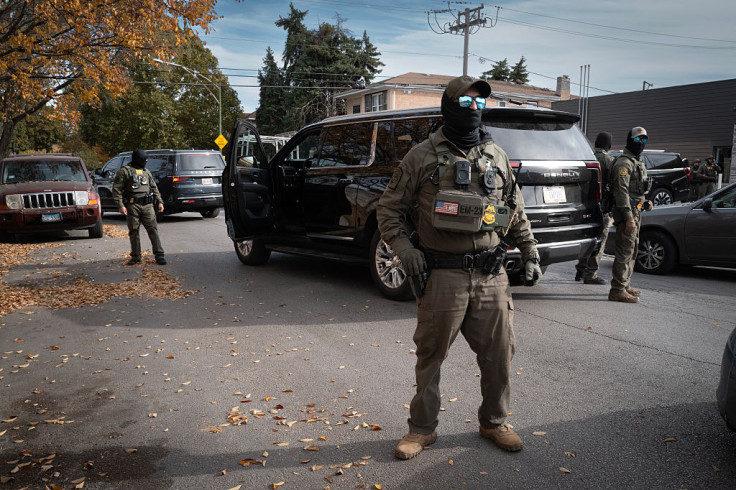
Community activists in the Pacific Northwest have built a shared database of license plates linked to immigration enforcement vehicles, aiming to help residents identify and track the movements of U.S. Immigration and Customs Enforcement agents as arrest activity has expanded in recent weeks, The Intercept reported.
The project, developed by an autonomous network of volunteers, lists more than 600 license plates matched to the make and model of vehicles observed during enforcement actions, most of them in and around Portland, Oregon. Organizers say the goal is to provide communities with clearer information about ICE operations, particularly when agents use unmarked vehicles.
"It helps reduce the unknown and reduce fear," one activist involved in the project told The Intercept, speaking on condition of anonymity. "ICE is doing whatever they can to be undetected, and so anything we can do to chip away at that obfuscation" matters.
Rather than hosting the information on a centralized website, the group has published the database through the InterPlanetary File System, a decentralized, peer-to-peer network they say is less vulnerable to subpoenas or takedown requests. The listings rely on community-submitted photographs of vehicles seen during enforcement actions. Volunteers review each submission, and only plates that have appeared in at least two separate sightings are made public.
"We probably have twice as many plates as what was published," the activist said. "But we made a decision to only publish those plates that had at least two observations" to avoid inaccuracies.


The effort comes as immigration enforcement activity has increased in Oregon. For much of the year, ICE arrests largely focused on people with existing deportation orders or scheduled check-ins. Since October, however, agents have carried out broader actions, according to Natalie Lerner of the Portland Immigration Rights Council. Her organization estimates nearly 800 detentions in the area since early October.
"We're seeing a number of collateral arrests," Lerner said. "People are calling our hotline saying they're afraid to leave their homes, or they're afraid to go to work."
Similar monitoring efforts have emerged in other cities, as NBC News recently revealed. Volunteers in Los Angeles, Chicago and Charlotte have organized neighborhood watch groups, distributed whistles to signal agent activity and documented arrests from a distance. Jill Garvey of States at the Core described the approach as a "nonviolent tactic" in response to what she called a new scale of enforcement.
Federal officials, however, have warned against such efforts. In July, Homeland Security Secretary Kristi Noem said those who "dox" or obstruct ICE agents would be prosecuted.
© 2025 Latin Times. All rights reserved. Do not reproduce without permission.


