
The remains of the 32 Cuban soldiers killed by the U.S. in Venezuela during the operation that captured authoritarian President Nicolas Maduro were returned to their country in boxes smaller than coffins.
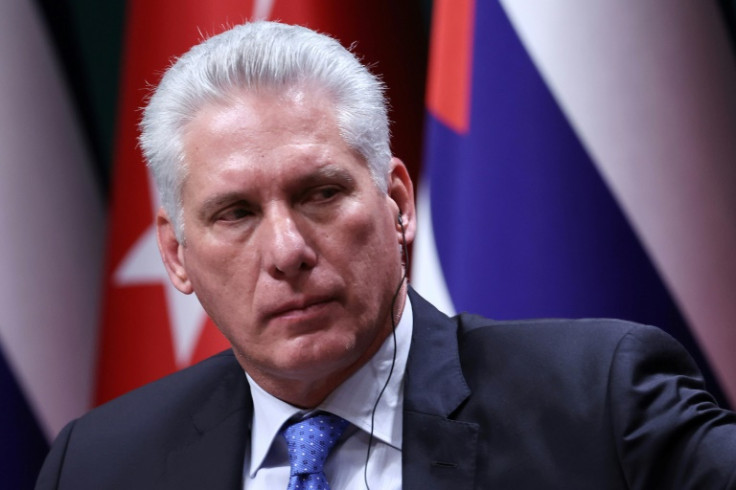
Images broadcast on state television showed the remains being received by a military band during a ceremony overseen by President Miguel Diaz-Canel and former leader Raul Castro, as well as top military officials.
General Lazaro Alberto Alvarez said those fallen represented the country's support for the country and its allies. "If this painful chapter of history has demonstrated anything, it is that imperialism may possess the most sophisticated weapons, may impose immense material wealth, may buy the minds of the wavering, but there is one thing it will never be able to buy: the dignity of the Cuban people," he said.
The remain were taken by a motorcade to the armed forces ministry through the country's main boulevards. Thousands paid their respects by saluting and waving Cuban flags.
Overall, 32 Cuban soldiers died in the operation that ended with the capture of Maduro. One survivor recently described the scenes that unfolded during the early hours of January 3. Maduro had expanded the role of Cuban bodyguards in his security detail over the past months as U.S. pressure on his regime intensified, The New York Times detailed.
In a TV interview, the soldier noted that he, along with fellow troops, were "carrying out our mission in Venezuela, supporting the country in its defense against imperialism."
He went on to detail the moment when the attack began, calling it "disproportionate." "It involved planes, bombs, drones, as well as two Apache helicopters that strafed indiscriminately the area where we were, seeking to leave no one alive."
"They showed particular brutality toward our companions. Evidently, their purpose was ending the life of all of us who were in that place," he added.
Elsewhere, an AFP report quoted a former officer of the Venezuelan army saying that Cuban intelligence convinced the Maduro regime that the U.S. would never attack the South American country, a notion that played a significant role in his capture.
Once the operation already began, different factors contributed to its success. The New York Times detailed that the country's advanced air defense systems bought from Russia were not connected to the radar when U.S. forces descended in Caracas.
The outlet claimed that the military's "incompetence" played a large role in the success of the operation, as its antiaircraft systems were practically disconnected during the operation.
Moreover, it's possible they have not worked for years, according to analysts and former officials cited by the NYT. Videos and satellite imagery reviewed by the outlet determined that some components were still in storage at the time of the attack.


© 2025 Latin Times. All rights reserved. Do not reproduce without permission.


