
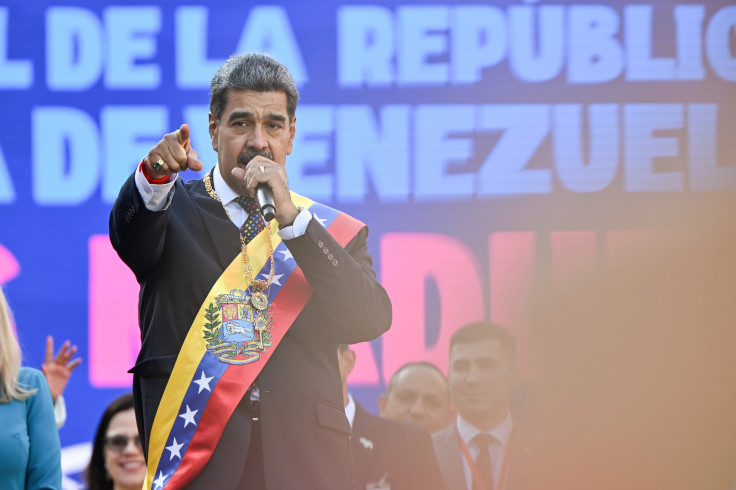
Since rising to power in Venezuela, Nicolás Maduro has relied on patriotic and confrontational rhetoric, frequently criticizing the United States and other Western powers. For years he has spoken out against what he describes as interference and control by the U.S. and its allies over the global order, and he has repeatedly said Venezuela is prepared to withstand any outside intervention, citing the country's history and tradition of resistance.
Since the United States began a military campaign near Venezuelan waters as part of a counter-terrorism effort, Maduro has repeatedly defied U.S. threats and insisted that Venezuela will defend its sovereignty at any cost.


Despite Maduro's assertions, experts warn that a prolonged war with the United States would jeopardize Venezuela's economy, and the country's limited resources to sustain an armed conflict would only deepen the ongoing crisis in the Latin American nation.
According to a Miami Herald report, economic experts say Venezuela's economy suffers from deep structural problems and has accumulated numerous distortions and inequalities since Maduro took power in 2013, leaving the country poorly positioned to handle any prolonged military conflict.
The collapse of oil prices that began in 2014 was an early warning, exposing economic damage caused by policies implemented under Hugo Chávez and continued by Maduro. Experts note that these structural weaknesses make Venezuela highly vulnerable to external shocks, including potential armed conflicts.
An economist who spoke to the Miami Herald on condition of anonymity for security reasons said the economic impact of a "foreign military shock" would depend on the scale and duration of a potential conflict with the United States.
"Venezuela's economy tends to respond very poorly to external shocks. Even internal clashes generate a chain effect that increases volatility," the economist said, adding that such disruptions could limit the Venezuelan state's ability to fund long-term strategic defense.
Although the Venezuelan economy improved between 2022 and 2024, Manuel Sutherland, an economist at the Central University of Venezuela, said the country still needs substantially better economic and social conditions to grow, including reduced military tensions, less political oppression, and fewer uncertainties.
Sutherland also noted that Maduro would likely struggle to secure support from Venezuela's allies due to existing debts and logistical challenges.
"There are significant debts with the Iranians, the Chinese, and the Turks. These allies are geographically distant, facing their own difficulties, and likely lack the capacity to provide military assistance," he told the Miami Herald.
According to the outlet, Venezuela has been in sovereign default since 2017, meaning it cannot meet its debt obligations. Unofficial estimates place Venezuela's current debt at about $164 billion, owed to private creditors and allied nations such as Russia and China.
Maduro made a public appearance on Dec. 1, dancing before supporters as he insisted that the United States would not force him from office amid heightened tensions between Caracas and Washington.
Maduro told the crowd that U.S. actions constitute "psychological terrorism" and said they have not altered his position. "They have not moved us one inch from the correct path we must always follow," he said. He added, "They will never remove us from the path of the revolution, under any circumstance."
🇻🇪🇺🇸 | Maduro ignora el ultimátum de Trump: se encuentra actualmente bailando en el escenario en un mitin público.pic.twitter.com/Z6Ww6KUEIi
— Alerta Mundial (@AlertaMundoNews) December 1, 2025

© 2025 Latin Times. All rights reserved. Do not reproduce without permission.


