
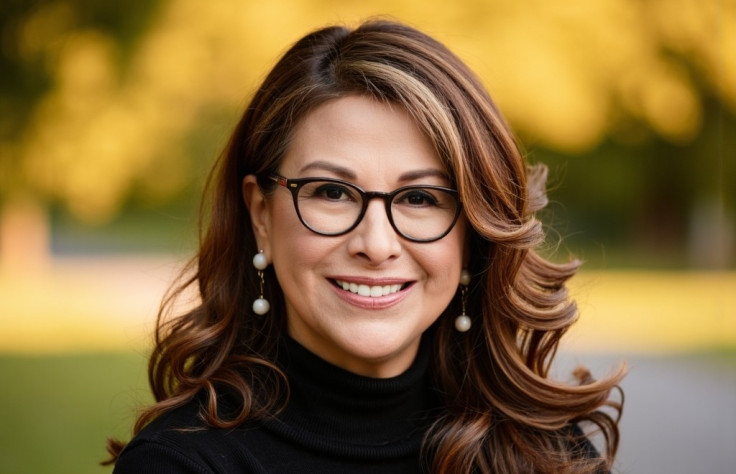
When Ana Valdez talks about Latinos in the United States, she does not argue from a place of ideology, sentiment, or identity politics. She does it with data. As president and CEO of the Latino Donor Collaborative (LDC), Valdez has spent the last decade and a half turning hard numbers into a counterweight against narratives regarding the economic power of the demographic that she says rely too heavily on perception, stereotyping, or political convenience.
"We want facts," she tells The Latin Times. "Not what media says we are. Not what people assume. Facts."
Founded 15 years ago, the Latino Donor Collaborative operates as a think tank focused on measuring the economic, cultural, and social impact of Latinos in the U.S. economy. In 2025, the organization had its most productive year to date, releasing ten major reports spanning economics, media representation, technology, and youth behavior.
"We measure where this new generation of Latinos is going, how they're consuming, what they value," Valdez said. "Because what we constantly hear from brands is that Latinos are now driving pop culture."
The influence of Latinos at the moment, however, is about much more than consumption. "They're not only buying more," she said. "They're selling more. They're building. They're entering spaces that haven't traditionally recognized them as leaders."
To illustrate the shift, Valdez pointed to how Latino presence has rapidly expanded to areas where they were nearly invisible just a few years ago. She recalled watching college football during the pandemic and struggling to spot Latino players. "There were basically none," she said.
This past season, she noted, several of the most prominent Heisman contenders — including eventual winner Fernando Mendoza — were Latino, a shift she described as impossible to dismiss. "The Heisman is not affirmative action," she said. "It's math. Performance. Results. That tells you something about the level of achievement and perseverance of this second generation."
That same logic underpins LDC's broader mission, Valdez argues, especially in the current political climate. "The disconnect between how Latinos are talked about and what the numbers show is as big as ever," she said.


As Valdez sees it, the country is split. On one side are political movements and rhetoric that portray Latinos as criminals or economic burdens. On the other are everyday Americans whose lived experiences tell a different story. "People say, 'That's not my experience. My best workers are Latino. My best students are Latino. They don't deserve this.'"
In that context, LDC's reports are designed to confront decision-makers with fact-based reality, particularly in corporate boardrooms and policy circles. "The numbers shock them," she said. "And then we show them what that means in their own companies."
Valdez described conversations with executives who assume Latinos exist only at the margins of their organizations. "We'll say, 'You already have Latinos in your C-suite,'" she said. "They're surprised — until they actually think about names and faces."
What changes minds, she said, is not moral pressure but economic clarity. Latinos now contribute roughly $4 trillion to U.S. GDP, a figure generated largely by first-generation immigrants. "Their kids haven't even fully entered the economy yet," Valdez said. "Imagine what that looks like in ten years."
That dynamic, she believes, presents opportunities not just for Latinos, but for institutions willing to engage them. "This is not about social justice messaging," Valdez said. "It's about what's in it for you."

For Valdez, the work is also personal. Born and raised in Mexico City, she has lived and worked across Europe and the United States for three decades. Early in her career, she said, she tried to blend in. "I code-switched," she said. Today, she sees her cultural background as an asset. "I make people comfortable asking questions," she said.
Asked what Latinos uniquely bring to corporate America, Valdez points first to values. Family, she said, creates accountability and ambition. "You don't immigrate unless you believe tomorrow can be better," she said. She also pointed to pride — cultural, communal, and generational. "That connection is strong," she said. "And it shows up in how Latinos build, lead, and give back."
Looking ahead, LDC plans to build on the momentum reached in 2025. The organization is preparing a new multi-part report with Kantar in partnership with companies and nonprofits including Victoria's Secret, Univision, and Hispanic-focused philanthropic groups. The study will examine Latinos ages 18 to 46, focusing on education, entrepreneurship, workplace integration, and civic engagement.
As debates over Latinos grow louder, Valdez insists the most effective response is not argument but evidence. She says the role of LDC is to replace assumption with measurement and to put numbers in front of those who shape policy and markets. "Not what media says we are," she said. "Not what people assume. Facts."
© 2025 Latin Times. All rights reserved. Do not reproduce without permission.


