
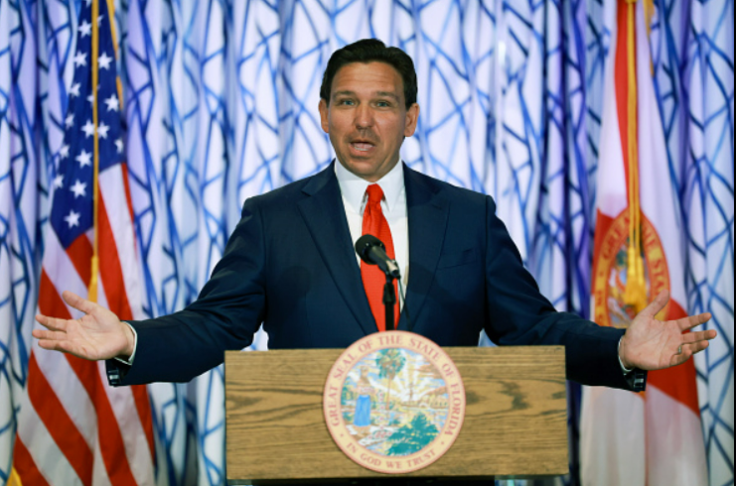
Florida Gov. Ron DeSantis is caught in controversy.
According to a new report, the DeSantis administration was involved in a scheme to divert millions in taxpayer funds to block two pieces of legislation he opposed last year.
A joint investigation by the Miami Herald and the Tampa Bay Times found that DeSantis redirected more than $35 million meant to help low-income Floridians, including children, and instead used the money to pay political consultants, lawyers and thousands of ads that allegedly helped him and his allies come election time.
Much of the money went toward ads across television, social media and radio defending Florida's six-week abortion ban. The report says the ads made exaggerated claims about the dangers of marijuana without disclosing that both issues were part of ballot amendments last fall.
The investigation also found that the administration manipulated state spending rules and kept millions in government costs out of public view, according to records and interviews.

The two pieces of legislation that the DeSantis administration opposed were Amendments 3 and 4, which would have legalized recreational marijuana and overturn the six-week abortion ban pushed by DeSantis, respectively.
Thanks to the millions of dollars spent by the administration to dissuade Floridians from supporting the legislations, both bills fell short of the 60% needed to pass.
According to the investigation, one of the most visible tools in DeSantis' campaign, the state's Hope Florida charity program, is now under grand jury investigation. Nearly $10 million from a Medicaid settlement was routed to a political committee controlled by the governor's chief of staff, the report says.
The investigation also revealed that the more than $35 million spent opposing the amendments was more than triple what had previously been disclosed.
Reporters from the Miami Herald and the Tampa Bay Times found that at least $21.2 million in taxpayer funds moved through a complex chain of financial transfers across five state agencies before ending up with selected vendors.
Some of the money used to influence voters came from programs meant to support vulnerable Floridians, the outlets found. The Department of Children and Families pulled $1.1 million from its child protection budget to fund ads.
The administration also redirected another $4 million from Florida's opioid settlement trust fund toward the campaigns. In total, the report notes, 79% of the $36.2 million spent came from healthcare-related funds.
Television ad records reviewed by the outlets show that the Agency for Health Care Administration, the Department of Health and the Department of Children and Families increased their ad buys in late September, as election season intensified and mail-in ballots went out.
After reviewing the outlets' analysis of how the administration spent state money leading up to the 2024 election, lawmakers and former state officials said the ad blitz, at minimum, skirted state law.
Kenneth Goodman, a professor emeritus at the University of Miami, told the papers that the administration's campaign to steer voters away from the proposals amounted to "undermining the will of voters by diverting resources intended for a vulnerable population."
"This is corruption at the expense of children," he said.
Under Florida law, it's a misdemeanor for any state employee or official to use their position to interfere in an election or influence how someone votes.
Despite the findings, DeSantis and his spokespeople have repeatedly insisted the state's only aim was to inform Floridians about the amendments.
"It is not electioneering," DeSantis said last September. "It's things that can absolutely be done through these public service announcements. And I'm glad they're doing it."
But to Chris Brimer, a partner at the Atlanta-based ad placement firm Canal Partners Media, the intent behind the ads was obvious.
"To me, it sure sounds like they took money meant for other purposes and clearly used it to advocate for a desired outcome on these amendments," Brimer said.


© 2025 Latin Times. All rights reserved. Do not reproduce without permission.


