
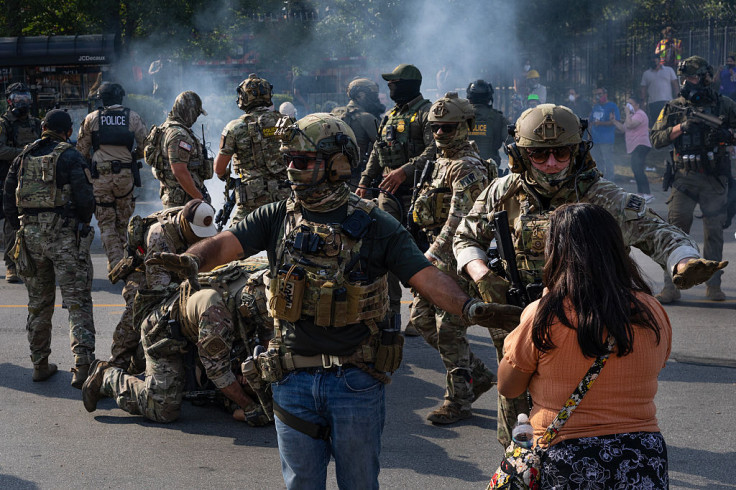
Federal immigration enforcement in the Chicago area has intensified since September under Operation Midway Blitz, an initiative that has led to thousands of arrests and a growing number of family separations, with visible effects on children, according to a new sprawling report from the Chicago Sun-Times.
Educators, parents and child psychologists told the news outlet that children whose parents were detained have shown signs of anxiety, behavioral regression and emotional distress that often persist after families are reunited.
Operation Midway Blitz involves federal agents carrying out arrests across immigrant neighborhoods, sometimes near schools and workplaces. Immigration and Customs Enforcement has not released comprehensive data on how many of those detained are parents, but the Chicago Sun-Times documented multiple cases in which caregivers were taken into custody while going about daily activities, leaving children abruptly without parental support.


Federal officials have said the enforcement effort is aimed at removing the "worst of the worst," but data released by ICE and analyzed by CBS News in early December raises questions about that characterization.
According to the data, covering arrests in Chicago and the nearby Broadview facility from the start of Operation Midway Blitz through Oct. 15, only 15% of those detained had a prior criminal conviction. Another 18% had pending criminal charges, while 67% were held solely for civil immigration violations, such as overstaying a visa or entering the country unlawfully.
"The group that has seen the largest growth, especially in recent months, is those with only civil immigration violations," said Julia Ingram, a data journalist at CBS News. She added that ICE has not disclosed the nature or severity of pending charges for those without convictions.
The data also showed that just 3% of those detained in the Chicago area during Operation Midway Blitz had convictions for violent crimes, compared with about 7% nationwide under the Trump administration's broader immigration enforcement campaign.
"Family separation is considered one of the biggest adversities that kids can experience," said Colleen Cicchetti, a pediatric psychologist at Lurie Children's Hospital. She said children often respond with changes in sleep and eating habits, aggression, emotional outbursts or a return to behaviors typical of younger ages, particularly when separations are sudden or accompanied by fear.
The Chicago Sun-Times reported that some children developed nervous tics, bedwetting or heightened attachment after their parents were detained. In one case, Brayan Plata, an asylum-seeker from Colombia with no criminal record, was held in federal custody for 20 days after being detained at his landscaping job. During that time, his 9-year-old daughter, Danna, began scratching her skin and showing signs of anxiety, according to her mother, Ingrid Guanume.
Even after parents return home, children continue to live with uncertainty. "The fear of separation is almost as powerful as the separation itself," said Dana Rusch, a clinical psychologist specializing in immigrant family mental health. She said chronic exposure to the threat of detention can lead to ongoing stress and anxiety in children.
© 2025 Latin Times. All rights reserved. Do not reproduce without permission.


