
The Trump administration is looking for Cuban insiders to make a deal that will end the Havana regime by the end of the year, according to a new report.
Officials, however, don't have a concrete plan to end the Communist government after almost 70 years, the Wall Street Journal added.
The report stands in contrast with a previous one from last week, where officials told CBS News that the administration was not seeking to catalyze the collapse of the regime but rather negotiate a transition away from its current system.
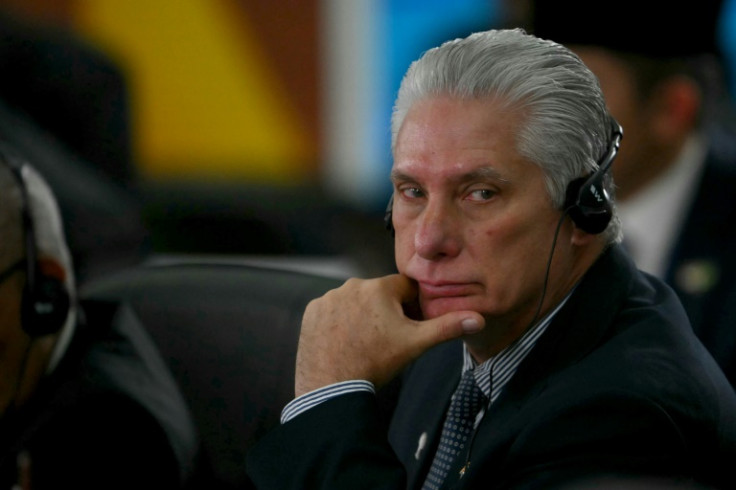
Havana has struck a defiant tone, with Cuban President Miguel Diaz-Canel recently saying the country is not holding talks with the U.S. except on some migratory issues.
However, the government is in a fragile position as the country goes through its worst economic crisis since the regime rose to power.
Moreover, experts are warning that the situation could deteriorate further as the ongoing shortage of oil will deepen as the U.S. cuts shipments from Venezuela following the capture of authoritarian President Nicolas Maduro.
The New York Times detailed that the country needs 100,000 barrels of oil a day to function, but it's not getting nearly enough. In fact, a regime-run television and radio broadcaster said on Tuesday it was off the air for several days because it didn't have diesel to power the station.
The outlet noted that shipments from Venezuela, an ideological ally, had already been declining. At its peak it would send 100,000 barrels a day, but the figure had dropped to about 35,000, according to experts quoted by the outlet.
According to a recent poll, over three in four Cubans intend to flee the country. The survey was conducted by the Social Rights Observatory during the summer and reported by the Wall Street Journal as part of a broader piece about the country's crumbling economy.
The same poll showed that seven in ten respondents go at least without a meal a day and nearly 90% live in extreme poverty. Moreover, for over 70% of Cubans their main concerns are the lack of food and constant blackouts.
Some 2.7 million people have already left Cuba since 2020, a quarter of the population. Hundreds of thousands have gone to the U.S., Havana-based demographer Juan Carlos Albizu-Campos told the outlet.


© 2025 Latin Times. All rights reserved. Do not reproduce without permission.


