
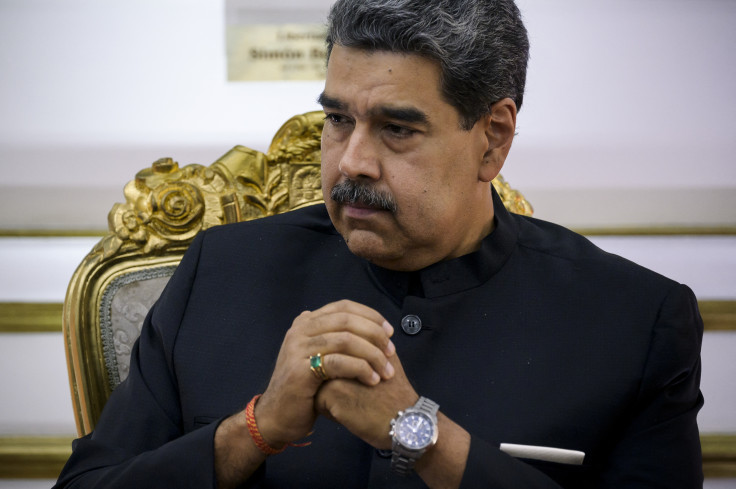
The Venezuelan regime has begun shutting oil wells as it runs out of storage facility due to the blockade of sanctioned tankers imposed by the Trump administration, according to a new report.
Bloomberg detailed that Caracas is seeking to reduce production in the Orinoco Belt by at least 25% to half a million barrels a day. The figure amounts to 15% of the country's daily output of 1.1 million of barrels a day.
The plan, the outlet added, is shutting wells in the most extra-heavy crude division and then move to the rest. The decision appears to confirm that the Trump administration's strategy of putting pressure on the country's source of revenue is having an impact.
A recent report from Reuters claimed that the White House ordered military forces to focus on enforcing a "quarantine" of tankers off the Venezuelan coast for the next two month.
A White House official told the outlet that while "military options still exist, the focus is to first use economic pressure by enforcing sanctions to reach the outcome the White House is looking."
"The efforts so far have put tremendous pressure on (authoritarian President Nicolas) Maduro, and the belief is that by late January, Venezuela will be facing an economic calamity unless it agrees to make significant concessions to the U.S.," the official added.
In fact, analysts consulted by The Atlantic said the decision could exert significant pressure on Maduro by targeting the regime's main source of revenue, potentially forcing significant concessions while stopping short of guaranteeing regime change.
Juan Gonzalez, a former National Security Council adviser on Latin America under President Joe Biden, said the move strikes at "the single biggest source of revenue that has propped up Maduro's government since 2013." "If the goal is to force concessions, he said, "this is a really smart move."
U.S. officials say the seizures are legally grounded in existing sanctions, distinguishing them from earlier airstrikes on suspected drug-smuggling boats. Still, analysts warn the measures carry risks. Oil revenue underpins both the Venezuelan state and the broader economy, raising the possibility of worsening humanitarian conditions and increased migration. Gonzalez said sustaining a full embargo would be difficult "given the humanitarian and migration implications."
The pressure campaign has already had other ripple effects. Russian-linked oil company Cyprus Limited recently announced it would exit Venezuela, citing the combined impact of international sanctions and financial restrictions. The company said it faced a "structural incapacity" to continue operations, adding to signs of strain in the energy sector.


© 2025 Latin Times. All rights reserved. Do not reproduce without permission.


