
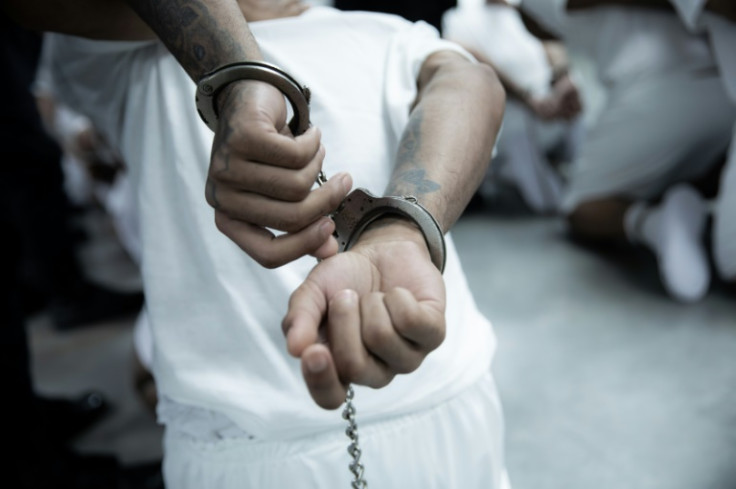
A group of Venezuelans who were deported from the United States to El Salvador's maximum-security CECOT prison and later returned to Venezuela urged Washington to comply with a federal court ruling they say would allow them to challenge their deportations in U.S. courts and seek what they called a "fair hearing."
U.S. District Judge James Boasberg ruled last week that the Trump administration must urgently arrange a path for hundreds of Venezuelans deported to El Salvador to contest their removals, finding their expulsion violated due process and that they have a right to challenge it in court. Under the order, the administration must submit a plan within two weeks outlining how it will facilitate that process.
"The court ruling now orders that we be granted the opportunity for a fair hearing in accordance with the law in the United States," Ysqueibel Peñaloza, a former detainee, told Reuters on behalf of some 252 former prisoners. "We call on the governments of the United States and El Salvador to fully comply with the court order."
-
Stephen Miller Says Undocumented Immigrants 'Had No Due Process Entering the Country' and Don't Deserve It in Removal

-
Stephen Miller Reportedly Told White House That They Could Invoke 18th-Century Law To Expedite Deportations If U.S. And Venezuela Were At War
-
Trump Administration Seeks To Stop Asylum Process By Deporting People To Third-Party Countries


The Venezuelans were sent to El Salvador in March after President Donald Trump invoked the 1798 Alien Enemies Act to deport people the administration classified as members of the Tren de Aragua gang. Lawyers and relatives of some detainees have denied gang ties and said families often lacked information about where the men were being held.
Boasberg's ruling focused on a subset of 137 Venezuelan men deported under the Alien Enemies Act and held at CECOT. He wrote that "this class was denied their due-process rights" and ordered the government to facilitate hearings or otherwise provide a process consistent with due process requirements. The judge added that the government could comply either by returning the men to the United States or by offering hearings that meet due process standards without physically returning them.
The Guardian, which tracked several of the 252 men after their release and return to Venezuela under a U.S.-brokered prisoner swap, reported former detainees describing beatings and other abuse at CECOT and long-term effects after their release. Human Rights Watch and Cristosal concluded the men were subjected to serious physical and psychological abuse during their detention, the newspaper reported.
DHS spokeswoman Tricia McLaughlin criticized Boasberg's order through a statement reported by CBS News, saying he was "way over his skis," and the administration has argued that once the men were transferred to El Salvador, they were no longer in U.S. custody and U.S. courts lack jurisdiction.
Boasberg rejected that view, finding the United States maintained legal custody while El Salvador held the men at Washington's request.
© 2025 Latin Times. All rights reserved. Do not reproduce without permission.


