
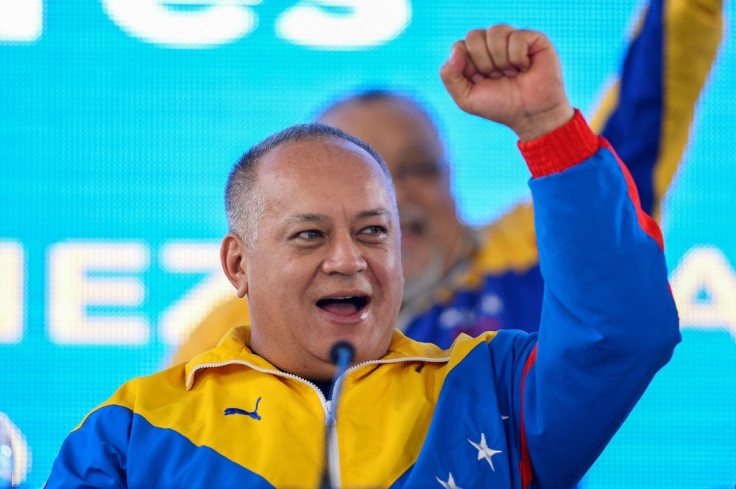
Diosdado Cabello, the second-in-command of the Venezuelan regime, also confirmed authoritarian President Nicolas Maduro had a phone conversation with Donald Trump, but warned that "no one has the slightest idea" of what was discussed.
"The call took place and now everyone is an expert in knowing what they discussed," Cabello said during a televised address. "No one was there, no one has the slightest idea," said the official, who noted that "Maduro has been very respectful" and didn't comment on the content of the conversation.
🇻🇪🇺🇸 | Diosdado Cabello sobre la llamada entre Nicolás Maduro y Donald Trump: “Ocurrió, y ahora todos se creen expertos en saber de qué hablaron. Ninguno estaba ahí, ninguno tiene la más mínima idea”. pic.twitter.com/VjovPHCtEq
— Alerta Mundial (@AlertaMundoNews) December 4, 2025
Maduro also confirmed he held the call with Trump on Wednesday, describing the conversation as respectful and potentially opening the door to renewed diplomatic engagement between the two governments.
"About ten days ago the White House called the Miraflores Palace and I had a conversation with President Donald Trump," Maduro said during a televised appearance in Caracas. "It was in a tone of respect, even cordial. If that call means that steps are being taken toward respectful dialogue, welcome dialogue and diplomacy."
Maduro said he had refrained from commenting earlier out of "prudence," adding that "when there are important matters, silence is necessary until they come to pass."
A recent report claimed that Trump gave Maduro a deadline to leave Venezuela and avoid risking a forceful removal in their phone conversation. That deadline passed on Friday, November 28, and the next day Trump said all airspace above the South American country should be considered closed.
Reuters was the latest outlet to report on the content of the phone calls between Trump and Maduro, in which the latter made a series of requests to leave power. Most of them were rejected.
The outlet detailed that Maduro said he would be willing to relinquish power if he and his family members were given full legal amnesty, including the removal of sanction and the end of a case before the International Criminal Court.
He also requested the lifting of sanctions for more than 100 Venezuelan officials who face charges of human rights abuses, drug trafficking or corruption, and that Vice President Delcy Rodriguez run an interim government before new elections. Trump, in turn, said Maduro had a week to leave the country and go to a destination of his choice.
The Miami Herald also reported that Maduro offered holding free elections in exchange for keeping control of the country's armed forces. Another sticking point between the parties was that Washington D.C. demanded Maduro resign immediately, to which Caracas refused.


© 2025 Latin Times. All rights reserved. Do not reproduce without permission.


