
Since the United States military launched its counter-narcotics campaign in South America, officials have approved 22 strikes on suspected drug boats, leaving at least 87 people dead.
The operations have faced intense scrutiny from human rights groups and lawmakers, some of whom have labeled the strikes as extrajudicial killings and argued that using lethal force in international waters without a clear legal basis violates international law.
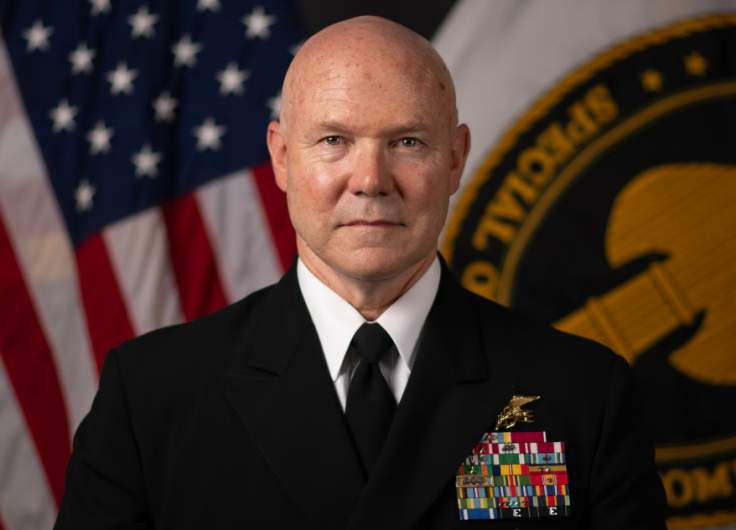
The most scrutinized incident took place on Sept. 2. The attack unfolded in two stages, with the initial blast leaving nine people dead and two survivors clinging to debris. According to reports, Defense Secretary Pete Hegseth instructed the military to leave no survivors, prompting Adm. Mitch Bradley, then overseeing the mission under Joint Special Operations Command, to order a second strike to carry out that directive.


Since the alleged order of Hegseth request became public, he has come under heavy scrutiny and is now being questioned by members of Congress, who are working to identify others responsible for the decision to kill the two survivors.
According to a new Washington Post report, Bradley, the admiral who executed the strike, and his advisers are being pressed on why officials proceeded with the follow-up attack. People who viewed footage told the outlet the survivors were waving their arms and looking upward, signaling for help or mercy.
When Bradley appeared before lawmakers on Capitol Hill last week, he defended his actions, saying he weighed what to do with the survivors against the Trump administration's claim that drug trafficking represents a national threat.
The Washington Post reported that Bradley told Congress intelligence analysts had labeled everyone on board a "narco-terrorist," a classification that, under the administration's framework, allowed the use of lethal force.
During his Dec. 4 visit to Capitol Hill, members of Congress who met with Bradley privately told the outlet he sought advice from his military lawyer in real time. Four people familiar with the matter said Bradley did seek legal guidance, though he did not say whether the lawyer viewed the survivors as shipwrecked and no longer participating in hostilities.
The military lawyer, whom The Washington Post did not name due to his role in a secretive unit, told Bradley that international law defines "shipwrecked" individuals as those "in peril at sea" because of a mishap affecting their vessel and who refrain from hostile acts. Experts note that such combatants receive special protections because, unlike forces on land, they have no way to escape or seek cover.
Although Bradley made the call to carry out the second strike, people familiar with the matter told the outlet that Hegseth served as the operation's target engagement authority, meaning he approved the use of force and ultimately bore responsibility for the attacks.
The report says Hegseth watched live video of the initial strike but left for other meetings minutes later and did not realize two people had survived. He previously said he did not learn about Bradley's second strike until several hours afterward.
Several lawmakers have come out to criticize Hegseth, and Republican-led Committees in the House and the Senate announced they will conduct respective investigations regarding the incident.
Republican Sen. Roger Wicker, the chairman of the Senate Armed Services Committee, issued a statement along with Democratic counterpart Jack Reed vowing to investigate the reported order.
They claimed to be "aware of recent news report — and the Department of Defense's initial response — regarding alleged follow-on strikes on suspected narcotics vessels," and said they will be conducting "vigorous oversight to determine the facts related to these circumstances."
As investigations into the matter continue, Congress is also considering a provision that would limit Hegseth's travel budget unless he turns over unedited video of the strikes.
A revised version of the annual defense policy bill released Sunday would restrict Hegseth's fiscal 2026 travel funds to "not more than 75%" until the videos are provided to the House and Senate Armed Services Committees, as NBC News reports.


© 2025 Latin Times. All rights reserved. Do not reproduce without permission.


