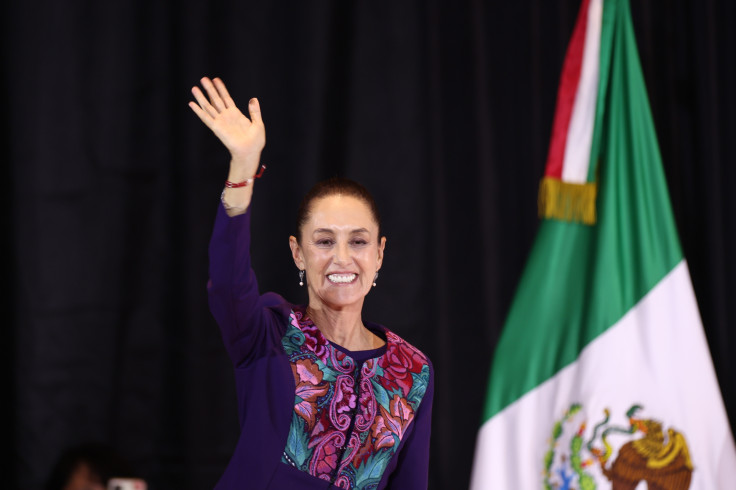
Mexican President Claudia Sheinbaum enters The New York Times' Most Stylish People of 2025 list from a place no one else on it occupies. She is the only sitting head of government among the 67 names selected, and her presence reframes the list's intentionally loose definition of style as something that can extend beyond clothes and celebrity into power, symbolism and public action.

In its citation, the Times emphasizes how Mexico's president has used embroidered garments tied to Indigenous communities as a consistent part of her public image during her first year in office. Those choices are not treated as aesthetic whims, but as signals. Sheinbaum's administration has also moved to confront fashion houses accused of copying Indigenous designs without credit or compensation, turning clothing into a site of cultural protection and political messaging.
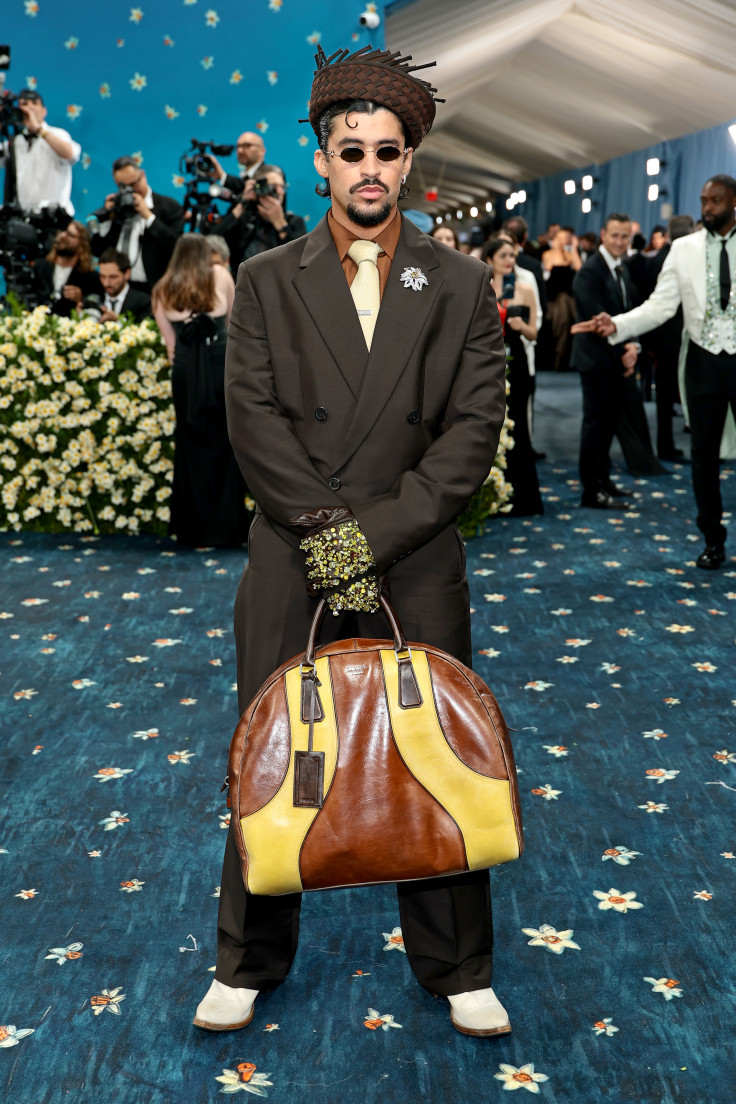
From there, the list's Latino presence expands into pop culture's loudest arenas. Bad Bunny appears as a figure who continues to blur the boundaries between global stardom, fashion and Caribbean identity. The Puerto Rican artist spent the year headlining 30 sold out shows in Puerto Rico, being named the next Super Bowl halftime headliner and cycling through radically different visual languages. He arrived at the Met Gala in Prada, performed concerts in loose streetwear and appeared on a billboard wearing nothing but underwear. The Times treats that range itself as the statement, proof that style today can be a form of controlled contradiction.
Cardi B completes the trio, representing another dimension of Latino influence. The Bronx-bred rapper stood out not just on red carpets but in court, attending her civil assault trial in Los Angeles in sharply tailored designer suits and carefully curated wigs. Even in a setting built on restraint and formality, the Times notes how Cardi B managed to command attention and narrative through clothing, reinforcing her ability to turn visibility into leverage.
Beyond those three, the list acknowledges Spanish-speaking global figures whose influence extends across borders. Tennis star Carlos Alcaraz transformed a haircut mishap into a championship look, shaving his head before the U.S. Open and later going platinum blond after winning the men's singles title.
@usopen You look great @Carlos Alcaraz 🧠❤️🥚🥚 #carlosalcaraz #tennis #usopen
♬ original sound - US Open
Rosalía was recognized for her album Lux, where she sang in 13 languages and matched that ambition with visuals that turned everyday domestic tasks into orchestral performance, particularly in the video for Berghain. While not Latino in the Latin American sense, both figures illustrate how Spanish-language culture continues to shape global ideas of style.
From there, the list widens dramatically. A$AP Rocky is positioned near the top as a figure whose influence cuts across fashion institutions. His year included serving as Met Gala co-chair, attending Cannes in Miu Miu and Saint Laurent and being named a fashion icon by the Council of Fashion Designers of America, alongside becoming a new face of Chanel. Kendrick Lamar's impact arrived at Super Bowl scale, where his bell-bottomed halftime look ignited conversation precisely because it fused nostalgia with modernity.
@nicolestorydent Thank you for the trip down memory lane, Kendrick. But also can you link your jeans, please?! They look amazing and we all want them. #relatable #accurate #millennial #momsoftiktok #y2knostalgia #90skid
♬ original sound - Nicole Story Dent
Pop aesthetics surfaced through Sabrina Carpenter, whose near-obsessive devotion to buttery yellow turned a color into a motif across tours, television appearances and stage wardrobes. Doechii embodied maximalism, shifting between braids, Afros, corseted gowns and barely-there ensembles, while André 3000 provoked debate by wearing a replica baby grand piano to the Met Gala, a gesture the Times argues was impossible to ignore, regardless of whether it was labeled fashion or stunt.
Athletes continued to blur lines between performance and presentation. Shohei Ohtani transformed a simple hand gesture from a cosmetics commercial into a viral phenomenon while leading the Los Angeles Dodgers to another World Series title. Shai Gilgeous-Alexander strengthened his reputation as the NBA's most fashion-forward MVP, releasing a signature shoe with Converse. Paige Bueckers transitioned from NCAA champion to top WNBA draft pick, carrying with her a carefully understated style amplified by charisma and social media presence. Naomi Osaka's bedazzled Labubus accessories pushed even further, turning a toy into a couture-adjacent talking point.
Fictional characters and institutions also earned places. Carrie Bradshaw returned as a style reference point as And Just Like That... concluded. Characters from The Gilded Age, Weapons, Sinners and KPop Demon Hunters were treated as cultural forces, reflecting how costume design and fandom now operate alongside celebrity fashion. Even an Erewhon smoothie collaboration made the list, a nod to how celebrity branding and consumption have become aesthetic experiences of their own.
The list also includes figures adjacent to power rather than within it. Pope Leo XIV was cited for altering the image of the papacy by pairing traditional vestments with a Chicago White Sox cap, while Melania Trump was noted for her strategic use of high-drama hats as first lady. Yet neither holds elected office, a distinction that leaves Sheinbaum alone in her category.
That isolation is what gives her spot added weight. Amid a collage of pop stars, athletes, fictional icons and viral moments, Claudia Sheinbaum stands as proof that style, as the Times defines it this year, can function as a language of leadership. By starting with her and flowing through Latino artists like Bad Bunny and Cardi B before widening into the rest of the list's cultural sprawl, the 2025 edition quietly suggests that influence today is measured not only by what is worn, but by what it represents, and who is willing to carry that meaning into public view.


© 2025 Latin Times. All rights reserved. Do not reproduce without permission.


