
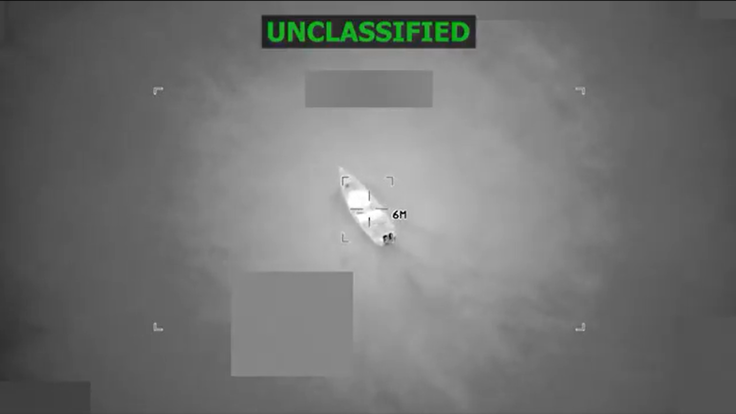
Legal experts are challenging the Trump administration's basis for a series of lethal strikes on suspected drug-smuggling boats in the Caribbean, warning that the operations may violate both domestic and international law.
The scrutiny intensified after The Washington Post reported that Defense Secretary Pete Hegseth gave a verbal directive to "kill everybody" during the first strike on Sept. 2. Two survivors were reportedly clinging to debris when a second strike killed them. The White House has acknowledged the follow-up strike but says it was "within the law." Hegseth has denied issuing an order for no survivors.
The administration has argued the U.S. is in a "non-international armed conflict" with drug cartels, claiming narcotics trafficking constitutes "an armed attack" on the country. President Trump said on Oct. 22: "We have legal authority. We're allowed to do that."
Legal scholars say that classification is crucial — and likely incorrect.
"They don't have military hierarchies, don't have the capability to engage in combat operations," said Brian Finucane, a former State Department lawyer, to CBS News. "It's absurd to claim that the U.S. is somehow in an armed conflict with them."
Without a legitimate armed conflict, experts say, the strikes fall under domestic law.
"Then it's murder ... because you can't kill somebody — even if you think they're a criminal — without adjudication," said Victor Hansen, a former military prosecutor. Even if the administration's armed-conflict argument were accepted, Hansen says the alleged killing of defenseless survivors would still be unlawful. "The president, he wants it both ways," he said. "He wants to call it an armed conflict, but then he doesn't even want to follow the rules of the armed conflict."
Under the Geneva Conventions, intentionally denying quarter — ensuring no one survives — is prohibited. The Defense Department's own manual describes orders to fire on shipwrecked individuals as "clearly illegal."
-
Republican Rep. Says Hegseth Should Resign If He Was Involved In Follow-On Attack Against Survivors Of Alleged Drug Vessel

-
Democratic Senator Says 'It's Very Possible There Was a War Crime Committed' in September Drug-Boat Strike

-
Pentagon Officials Reportedly Concerned That Hegseth Is Throwing An Admiral Under The Bus Following Scrutiny Over Double-Tap Attack


Congressional committees in both chambers have launched bipartisan inquiries into the Sept. 2 operation. Sen. Thom Tillis said that if troops were directed to kill survivors, "that's a violation of an ethical, moral or legal code." Administration officials defend the strikes as necessary deterrence. "Deterrence has to matter," Hegseth said this week. "Not ... the rinse-and-repeat approach of previous administrations."
© 2025 Latin Times. All rights reserved. Do not reproduce without permission.


