
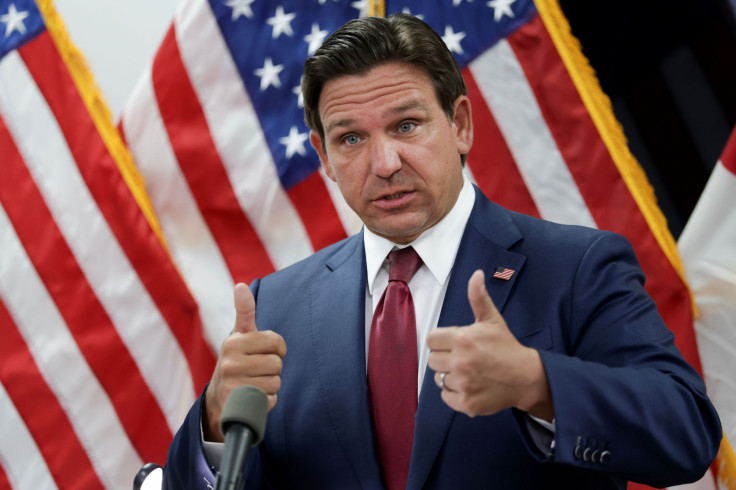
Florida Gov. Ron DeSantis and the state Cabinet approved more than $2 million in new funding for immigration enforcement equipment, expanding a statewide effort to support federal immigration operations through local law enforcement agencies.
The $2.4 million allocation, approved unanimously by the State Board of Immigration Enforcement, brings Florida's total approved spending to about $21 million from a $250 million fund created by the Legislature earlier this year to assist U.S. Immigration and Customs Enforcement.
The board was established as part of a package of laws passed in February that require all Florida counties to partner with ICE, impose state penalties for entering Florida without legal status, and eliminate in-state tuition for undocumented college students.The funding approval coincides with President Donald Trump's return to office and his call for expanded deportations and new detention capacity.
-
Muslim Group Threatens With Lawsuit After Florida Gov. DeSantis Designates It as a Foreign Terrorist Organization

-
Alligator Alcatraz 'Meets the Definition of Torture Under International Law', Amnesty International Claims

-
Florida's Ron DeSantis Diverted Millions of Dollars To Block Two Pieces of Legislation He Opposed, Report Says


The largest share of the latest funding, $738,451, will go to the Martin County Sheriff's Office, as Florida Phoenix reports. According to state data, Martin County ranks just behind the Florida Highway Patrol in encounters with suspected undocumented immigrants. The funds will be used for items including handcuffs and leg irons, pepper spray, tasers, ballistic gear, license plate readers, a rapid DNA testing machine, and tactical equipment.
Volusia County Corrections will receive the second-largest grant, $505,789, for detention beds, officer training under the federal 287(g) program, screening systems, staff bonuses, and facility supplies such as uniforms and mattresses.
Other grants were awarded to agencies across the state for varied technological equipment. In Fruitland Park, GPS trackers are intended to allow officers to monitor vehicles suspected of transporting undocumented immigrants, while in Havana, AI translators will be used to communicate with non-English speakers during stops and immigration-related activities. Putnam County plans to use biometric devices and DNA-linked identification tools to verify detainees' identities.
The funding comes as Florida lawmakers seek to extend their immigration enforcement approach nationally. On Thursday, Sen. Ashley Moody, R-Fla. introduced the Halo Act, a bill that would make it a federal crime to knowingly approach or remain within 25 feet of a federal immigration enforcement officer after being told to stay back— if the intent is to interfere with the officer's work, threaten physical harm, or harass them.
Researchers at the University of South Florida published a sprawling study earlier this week that revealed that intensified immigration enforcement in the state has had wide-ranging effects on immigrant families, including increased fear, economic instability, and psychological stress.
Immigrants interviewed by researchers said they'd abandoned construction and agricultural work in favor of "potentially exploitative" jobs closer to their homes in fear of federal raids, while many said they've experienced insomnia, appetite loss, fatigue and anxiety, symptoms they directly linked to enforcement news, social media videos of arrests and local detentions.
© 2025 Latin Times. All rights reserved. Do not reproduce without permission.


