
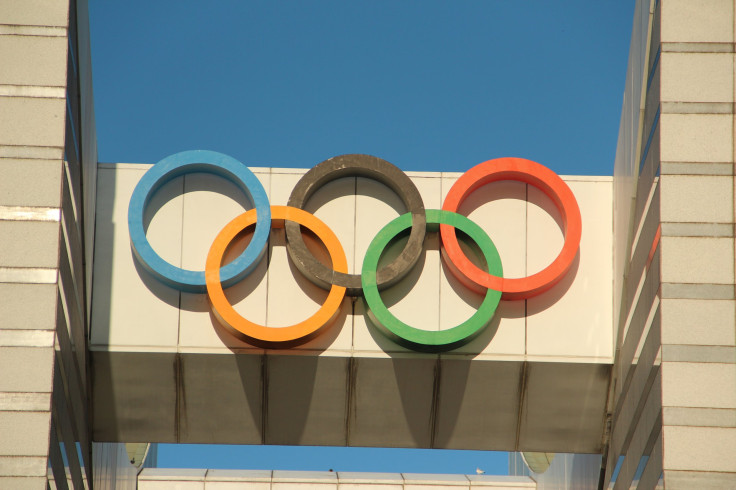
Following a lengthy legal battle, the International Olympic Committee announced in late March that transgender athletes would be banned from competing at the Olympic Games in both individual and team events in categories reserved for biological females.
"At the Olympic Games, even the smallest margins can be the difference between victory and defeat," IOC President Kirsty Coventry said in a video statement. "So, it is absolutely clear that it would not be fair for biological males to compete in the female category."
But according to a new post by the IOC, transgender athletes are not completely banned from the Olympic Games. In a FAQ section, the IOC said transgender athletes are eligible to compete in the category that aligns with their biological sex.


According to the committee, transgender athletes who are biologically female and meet qualification standards will be able to compete in the female category, as long as they have not used testosterone or other androgens.
For their part, transgender athletes who are biologically male and meet qualification standards will be able to compete in the male category.
"The IOC considers that competition is fair when all competitors are alike with respect to the characteristics that define the category, e.g., that all competitors are the same age in an age category, the same weight in a weight category, or the same sex in a sex category," the IOC wrote.
When the IOC announced its decision last month, the Trump administration celebrated the outcome, with White House spokesperson Karoline Leavitt saying Trump's executive order influenced the decision. Coventry rejected the notion of political pressure.
"This was a priority for me way before President Trump came into his second term," she said. "There's not been any pressure on us to deliver anything from anybody outside of the Olympic movement."
The issue of transgender participation in women's sports has been a major topic in the United States in recent years. Trump and other Republicans have pushed to ban transgender athletes from competing, arguing they have an unfair competitive advantage.
To date, 27 U.S. states have laws barring transgender girls from participating in team sports at publicly funded schools, which the Supreme Court appears likely to uphold.
"I can understand how any kind of hint of unfairness might raise people's hackles," Jaime Schultz, a sports historian and professor of kinesiology at Pennsylvania State University, told NPR last month. "But I think this blanket ban of transgender athletes is damaging. I think it can vilify trans folks who aren't even competing in sport."

© 2025 Latin Times. All rights reserved. Do not reproduce without permission.


