
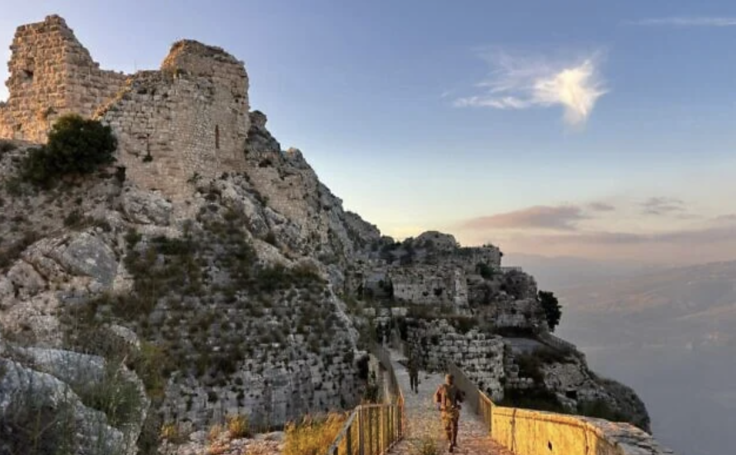
Israeli forces say they have uncovered an extensive Hezbollah underground complex beneath the historic Beaufort Castle in southern Lebanon, describing it as a major command-and-control center built with Iranian support and used by the militant group during the ongoing conflict.
The announcement comes just days after Israeli troops seized the medieval fortress, known locally as Qalaat al-Shaqif, in what military officials described as Israel's deepest ground incursion into Lebanon in more than 26 years. The castle, perched on a strategic ridge overlooking southern Lebanon and northern Israel, has long been considered one of the most important military positions in the region.
According to the Israel Defense Forces (IDF), soldiers operating around the castle discovered a large underground bunker and tunnel network that had allegedly been used by Hezbollah as an emergency command center. Israeli officials said the infrastructure formed part of a broader military system financed and supported by Iran to coordinate operations against Israel.
The discovery adds a new dimension to Israel's justification for its expanding military campaign in Lebanon. Prime Minister Benjamin Netanyahu said Sunday that Israeli forces had uncovered "Hezbollah infrastructure" in the Beaufort area while claiming the military had inflicted significant losses on the Iran-backed group over the past week.
-
Trump Says US Spoke With Hezbollah 'For the First Time Ever' Amid Lebanon Ceasefire Push: 'We Didn't Know They Spoke'

-
Netanyahu Faces Domestic Criticism After Trump Blocks Beirut Raid: 'Losing Control Over Israeli Sovereignty'

-
Trump Says He 'Couldn't Care Less' if Iran Talks Collapse, Calls Negotiations 'Very Boring'


Israel captured Beaufort Castle on May 31. Israeli troops raised the Israeli flag over the 900-year-old Crusader fortress after days of heavy fighting and airstrikes in nearby villages. Defense Minister Israel Katz called the operation part of Israel's effort to create a security buffer against Hezbollah attacks targeting northern Israeli communities.
Military analysts note that the castle's strategic value extends far beyond its symbolism. The fortress sits atop a commanding ridge overlooking the Litani River valley and key routes across southern Lebanon, providing extensive surveillance capabilities over both Lebanese and Israeli territory.
The tunnel discovery also fits a broader pattern of Israeli operations targeting Hezbollah's underground infrastructure. In April, the IDF announced it had dismantled what it described as Hezbollah's largest tunnel complex in southern Lebanon, a network Israeli officials said had been constructed with Iranian assistance and was capable of supporting large-scale military operations.
Fighting around Beaufort remains active despite ongoing diplomatic efforts to restore a ceasefire between Israel and Lebanon. Hezbollah claimed this week that its fighters carried out multiple attacks against Israeli forces operating near the castle, including missile and drone strikes.
The discovery of the tunnel network comes amid growing international concern over the escalating conflict.
France has called for emergency discussions at the United Nations, while Washington continues efforts to broker a broader agreement that would reduce tensions along the Israel-Lebanon border.
Israel maintains that operations in southern Lebanon are aimed at dismantling Hezbollah's military infrastructure and preventing future attacks on northern Israeli communities. Hezbollah and Lebanese officials have accused Israel of violating ceasefire understandings and expanding its military presence deeper into Lebanese territory.
© 2025 Latin Times. All rights reserved. Do not reproduce without permission.


