
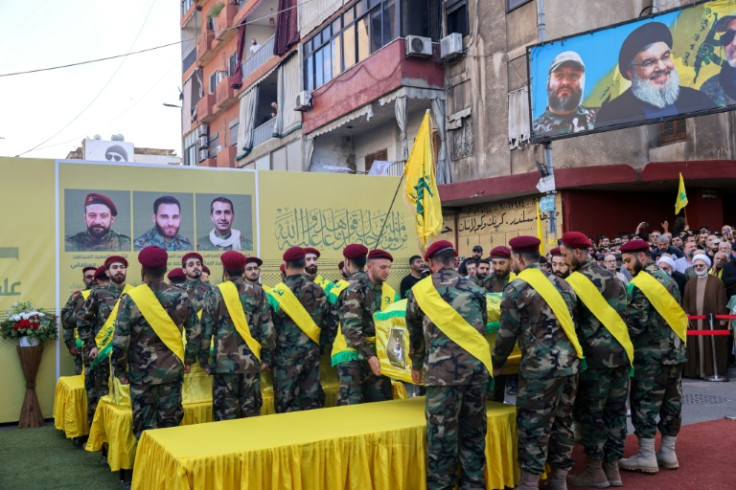
The capture of Venezuela's authoritarian President Nicolas Maduro won't have a large impact on the finances of Lebanese militant group Hezbollah, analysts said.
The militant group's relationship with the Venezuelan regime had little practical value, according to experts consulted by The New York Times.
The outlet delved into the relationship between the two, with Lebanese political analyst Kassem Kassir saying that "practically nothing has changed with Hezbollah after the fall of Maduro."
"If you look at the different pieces of these links, you see very thin evidence of Hezbollah's having widespread involvement" in unlawful activities in the South American country, analyst Mohanad Hage Ali noted.
"We haven't seen enough evidence that the organization is relying heavily on drug trafficking, like the Taliban did in Afghanistan, in funding its operations," he added. The arm of the group that focused the most on operations outside Lebanon was its External Security Organization, which is much smaller than at its peak in the early 2000s.
Right now, the group appears to be much more concerned about the weakening of the Iranian regime and its ability to receive funds from it.
However, when touting the capture of Nicolas Maduro, the Trump administration pointed to the Maduro regime's ties with such groups. Moreover, a recent poll noted that two in three Latinos said they support the U.S.'s military intervention in Venezuela after being told the country is a hub or narcoterrorism with ties to Iran and Hezbollah.
The survey, conducted by Morning Consult for the Council for Secure America, gave respondents the following premise: "As you may know, Venezuela is a known hub for Iranian and Hezbollah terror, including military drone production and narcoterrorism. Does this make you more or less likely to support American intervention in Venezuela?"
Overall, six in ten respondents of the poll said they were more likely to support an intervention after being told the information.
Among white respondents, 64% expressed support for the scenario, compared with 54% of women. By contrast, a majority of Black respondents opposed intervention, with 57% saying they would be less likely to support military action and 43% saying they would be more likely.
Venezuela's authoritarian President Maduro has been in captivity in the U.S. since January 3, with the Trump administration saying it will oversee the regime in the meantime, especially with regards to oil production and exports.


© 2025 Latin Times. All rights reserved. Do not reproduce without permission.


