
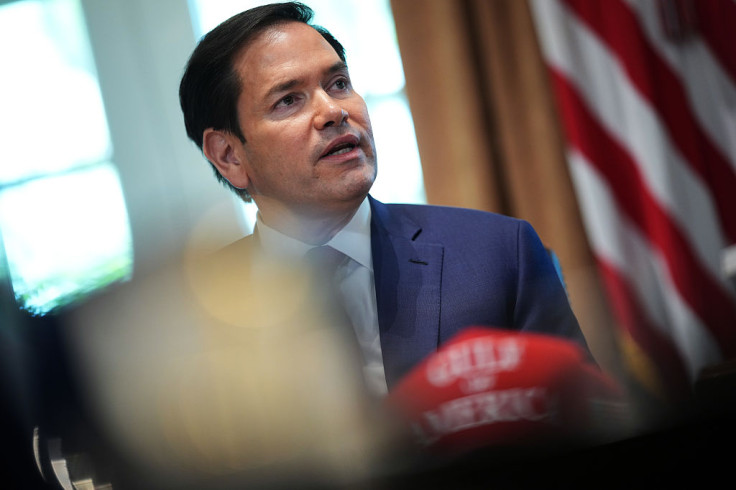
Secretary of State Marco Rubio said the United States has begun sending humanitarian aid to Cuba following Hurricane Melissa, emphasizing that the assistance will be delivered directly to civilians and not through the country's regime.
"We are working with the Catholic Church and partners to ensure aid reaches the Cuban people directly – not the illegitimate regime," Rubio wrote Wednesday on the social platform X. "The Trump Administration stands with the Cuban people."
The U.S. is sending the first humanitarian shipment to Cuba to help people in need as they continue to recover from Hurricane Melissa. We are working with the Catholic Church and partners to ensure aid reaches the Cuban people directly—not the illegitimate regime. The Trump…
— Secretary Marco Rubio (@SecRubio) January 14, 2026
The announcement followed a State Department statement confirming the first in a series of U.S.-supported humanitarian shipments, part of $3 million in disaster assistance pledged after the hurricane struck eastern Cuba last October.
According to the department, a U.S.-backed humanitarian flight departed from Florida carrying food, hygiene kits and other essential supplies, with a second flight scheduled for January 16 and additional aid to be delivered by sea in the coming weeks. The department said it has taken "extraordinary measures" to prevent diversion of the assistance and echoed Rubio's claimed that the delivery will be coordinated with the Catholic Church in Cuba.


Hurricane Melissa made landfall in Santiago de Cuba last October as a Category 3 storm, damaging homes and infrastructure and leaving widespread shortages. A December report from the International Federation of Red Cross and Red Crescent Societies said nearly 2.2 million people were affected and that access to shelter, water, electricity and transportation remained limited.
The aid effort comes amid heightened tensions between Washington and Havana. Rubio has reinstated financial sanctions on Cuban military- and government-linked entities and announced a pause in visa processing for Cuban nationals. President Donald Trump has also threatened to cut off oil and financial flows to Cuba, writing on Truth Social that "there will be no more oil or money going to Cuba" after Nicolás Maduro's capture.
Cuban President Miguel Díaz-Canel rejected those remarks, saying Cuba is not engaged in talks with the U.S. beyond migration issues and asserting that "no one dictates what we do." In a series of posts on X, Díaz-Canel said relations must be based on "sovereign equality" and accused Washington of worsening Cuba's economic crisis through decades of sanctions.
U.S. officials have said the administration is not seeking the collapse of Cuba's government but is maintaining pressure while allowing limited humanitarian and energy-related exceptions, according to a CBS News report earlier in the week. Cuba remains in its most severe economic downturn in decades, with recent surveys showing widespread food insecurity and record levels of emigration.
© 2025 Latin Times. All rights reserved. Do not reproduce without permission.


