
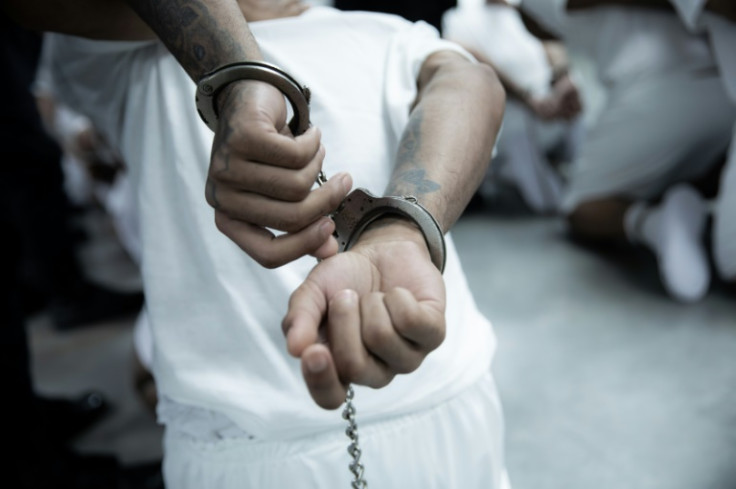
More Venezuelans are describing their harrowing experiences at El Salvador's CECOT mega-prison after being deported in the early months of the Trump administration.
Detainees told CBS News' 60 Minutes that they were forced to stay on their knees for hours, lights were on 24/7 and had to drink the same water they had for bathing and going to the toilet.
The men in question are two Venezuelans who sought to request asylum after entering the U.S. They were part of the 252 sent to El Salvador after the Trump administration invoked the Alien Enemies Act to do so.
"There was blood everywhere, screams, people crying, people who couldn't take it and were urinating and vomiting on themselves," said Luis Muñoz Pinto. "When you get there, you already know you're in hell. You don't need anyone else to tell you."
A recent report from Human Rights Watch (HRW) and Cristosal also described routine beatings by guards and riot police, including "the use of batons, punches and kicks," and said violence intensified after visits by foreign officials.
Three former detainees also reported sexual abuse. Prisoners were held in prolonged isolation with limited access to hygiene, food, or medical care. Some said guards told them they would "never leave alive" and that their families had abandoned them.
Some have challenged their deportation before a U.S. court and are seeking hearings. U.S. District Judge James Boasberg ruled that the Trump administration must urgently arrange a path for them to do so, finding their expulsion violated due process and that they have a right to challenge it in court.
The judge added that the government could comply either by returning the men to the United States or by offering hearings that meet due process standards without physically returning them.
However, Secretary of State Marco Rubio said the Trump administration can't comply with the order.
The official said such a scenario would not be possible after the capture of Venezuela's authoritarian President Nicolas Maduro earlier this month, noting that it would "risk material damage to U.S. foreign policy interests" in the South American country.
"The United States remains involved to see changes in Venezuela that are beneficial to the United States and that it also expects will be beneficial for the people of Venezuela, who have suffered tremendously," Rubio said in a passage of the declaration.
"These efforts entail ongoing, intensive, and extraordinarily delicate engagement with elements within the regime of Maduro's successor, so-called Acting President Delcy Rodríguez," he added.


© 2025 Latin Times. All rights reserved. Do not reproduce without permission.


