
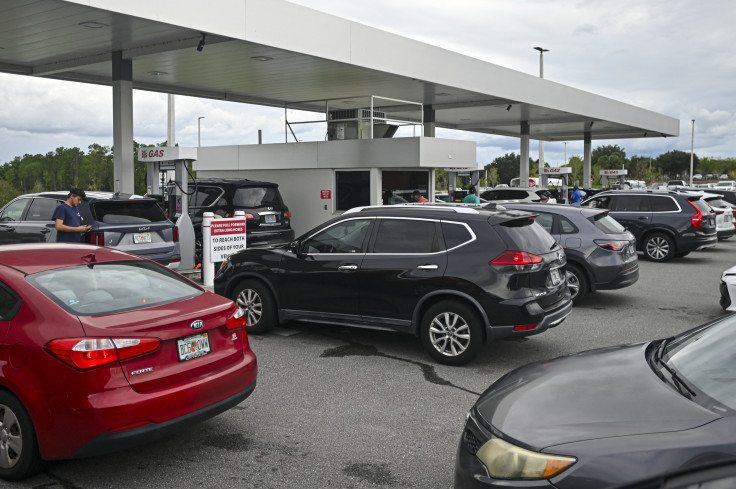
A majority of U.S. voters blame the president for rising gasoline prices as the conflict with Iran continues, according to a new Quinnipiac University poll, underscoring broader dissatisfaction with his handling of the economy and foreign policy.
Sixty-five percent of voters say the president bears at least some responsibility for the recent increase in gas prices, including 51 percent who say he is to blame "a lot," while 34 percent say he is responsible "not much" or "not at all." The divide is sharply partisan, with 97 percent of Democrats assigning blame compared to 22 percent of Republicans, while 73 percent of independents also say the president is responsible.
"From regular to premium to diesel, for many, pain at the pump rhymes with Trump," said Quinnipiac polling analyst Tim Malloy in a statement.
The poll also revealed that the president's overall approval rating remains low, with Thirty-eight percent of voters approving of his job performance, while 55 percent disapprove, figures that align with recent polling trends. Approval of his handling of the economy stands at 38 percent, matching an all-time low across both of his terms, while 57 percent disapprove.


Views on the administration's handling of the conflict with Iran are similarly negative. Thirty-six percent approve of the president's approach, compared to 58 percent who disapprove. Support for U.S. military action against Iran remains limited, with 40 percent backing it and 53 percent opposing it.
The poll also finds widespread opposition to potential escalation. Sixty-five percent of voters oppose bombing Iranian civilian infrastructure if negotiations fail, and 64 percent say a prior warning that "a whole civilization will die tonight" was not acceptable. "Voters have no taste for a leap from military targets to civilian ones," Malloy said.
Most voters expect the conflict to continue for an extended period, with 68 percent saying it will last months or longer. A plurality, 45 percent, believe the U.S. is in a weaker global position as a result of the military action.
The findings are consistent with other recent surveys showing declining approval. A The Economist/YouGov poll last week showed his approval stood at roughly 38 percent, while disapproval exceeded 50 percent. The numbers became the subject of a public dispute after commentator Jessica Tarlov said on-air that "Trump really is that unpopular," prompting a response from the president disputing the data.
Guess I’ll take this opportunity to mention that my numbers are far from fake - Trump really is that unpopular. And you can pre order my book I Disagree as of today!! https://t.co/HJ0ht7whiu pic.twitter.com/5uNypNRAlo
— Jessica Tarlov (@JessicaTarlov) April 17, 2026
© 2025 Latin Times. All rights reserved. Do not reproduce without permission.


