
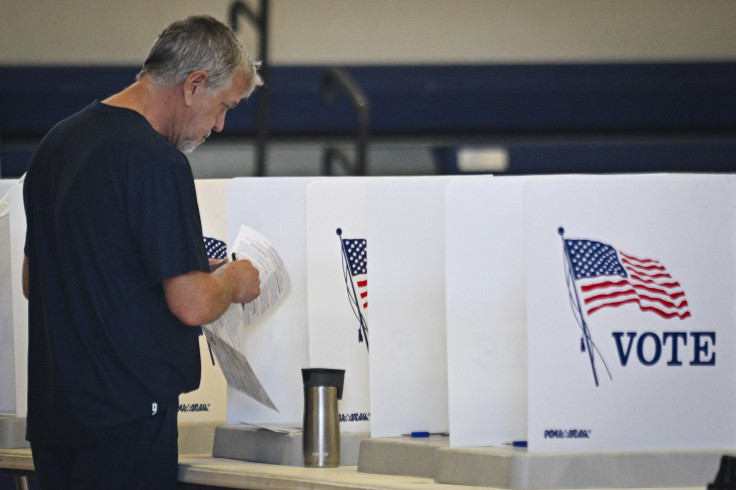
Pro-Trump activists are circulating a 17-page draft executive order asserting that China interfered in the 2020 election as grounds to declare a national emergency that would expand presidential authority over voting, The Washington Post reported.
The draft, dated April 2025, argues there is "clear and compelling evidence" that foreign threats "have not been mitigated but instead have intensified," calling the situation "an unusual and extraordinary threat to the national security and foreign policy of the United States." It cites emergency powers under statutes including the National Emergencies Act and the Defense Production Act.
Peter Ticktin, a Florida lawyer advocating for the proposal, said he has had "certain coordination" with White House officials, The Post reported. While acknowledging that "under the Constitution, it's the legislatures and states that really control how a state conducts its elections," he argued that alleged foreign interference "causes a national emergency where the president has to be able to deal with it."
Ticktin added that the emergency could allow the president to ban mail ballots and voting machines.
A White House official consulted by the news outlet said staff are "regularly in communication with a variety of outside advocates," but declined to comment on specific plans. President Donald Trump has said he will present "an irrefutable" legal argument in the form of an executive order if Congress fails to pass election legislation.


A 2021 intelligence review concluded that China considered influencing the 2020 election but did not proceed. Article I of the Constitution assigns authority over election administration to states and Congress, not the president. A presidential emergency over elections has not been tested in court.
Critics argue the proposal would face immediate legal challenges. The Cato Institute said through a statement that such an order would likely be "swiftly enjoined" by federal courts, as happened with Trump's March 2025 election-related order.
Cato also questioned the feasibility of key provisions. Roughly 43% of voters cast mail ballots in 2020 and about 30% did so in 2024, according to data cited by the institute. In Arizona, more than 80% of votes are cast by mail. Fewer than 0.17% of registered voters live in jurisdictions that hand-count ballots, according to Verified Voting.
© 2025 Latin Times. All rights reserved. Do not reproduce without permission.


