
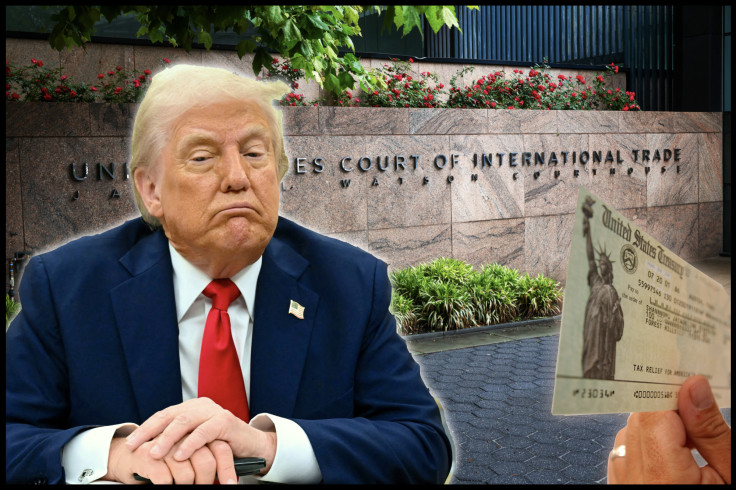
The U.S. government has started the long-awaited process of returning up to $166 billion in tariffs collected under President Donald Trump after the Supreme Court ruled in February that the levies were imposed without authority granted by Congress.
On Monday, Customs and Border Protection rolled out a new electronic system called CAPE, giving importers and customs brokers a way to seek refunds through a single digital process instead of untangling millions of individual entries one by one.
The legal turning point came on Feb. 20, when the justices, in a 6-3 ruling in Learning Resources, Inc. v. Trump, said the International Emergency Economic Powers Act did not give the president the power to impose broad tariffs. Chief Justice John Roberts wrote that the administration had tried to stretch the law far beyond its text, noting that IEEPA does not even mention tariffs or duties. The decision knocked out both the so-called reciprocal tariffs announced in April 2025 and the trafficking-related tariffs tied to fentanyl and immigration.
Now the money fight begins. CBP told the court that more than 330,000 importers paid roughly $166 billion on more than 53 million shipments. But not every company can collect immediately.

The first phase covers importers whose duties were either estimated but not finalized, or finalized recently enough to still fall within the agency's filing window. As of April 9, 56,497 importers had already registered for electronic payments tied to about $127 billion in refunds, including interest. More phases are to come.
For businesses, the catch is simple but important: the refund goes to the importer of record, meaning the company that actually paid Customs, not the consumer who may have absorbed higher prices at checkout.
The U.S. Chamber of Commerce says only IEEPA tariffs qualify in this process, not separate duties imposed under Section 232, Section 301 or other trade laws. CBP says accepted claims generally should be paid within 60 to 90 days. Lawyers who advise importers say timing could matter, because early filings may be processed sooner if the system avoids the bottlenecks many businesses fear.
Even with the refunds moving, Trump's tariff policy is still very much alive. Within hours of the Supreme Court decision, the White House invoked Section 122 of the Trade Act of 1974 to impose a temporary 10% global import duty, effective Feb. 24. Penn Wharton estimated the struck-down IEEPA tariffs had generated about $175 billion, a huge sum that shows just how high the stakes remain in America's trade wars.
© 2025 Latin Times. All rights reserved. Do not reproduce without permission.


