
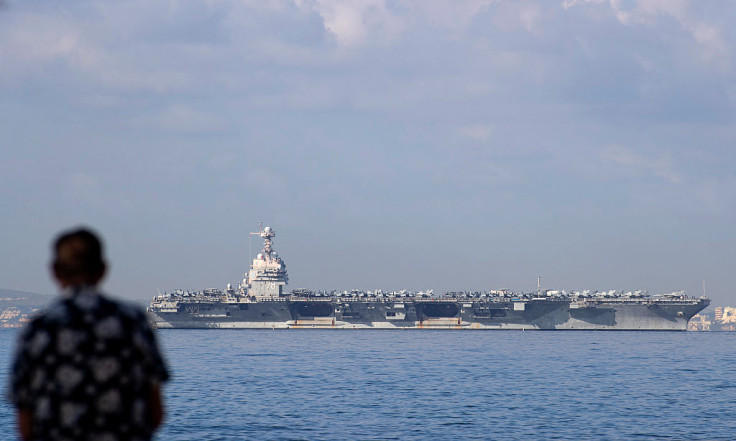
The United States has positioned more Tomahawk cruise missiles in the Caribbean than it deployed during the 2011 military campaign that led to the fall of Libyan strongman Muammar Gaddafi, according to figures reported Tuesday by El Español.
The outlet reported that U.S. forces near Venezuela currently include an aircraft carrier, an amphibious assault ship, six destroyers, two cruisers, a nuclear submarine and support vessels, along with 186 Tomahawk missiles — 36 more than were used in the opening phase of the Libya intervention. Additional forces include B-52 bombers, F-35 fighters and drones operating from regional bases, and roughly 20,000 military personnel.
Evan Ellis of the U.S. Army War College told the publication that Venezuela's forces clock in at fewer than 100,000 professional troops and lack the air defenses to counter a large-scale operation. Analyst Michael Shurkin added that the U.S. presence represents a force "capable of confronting almost any country in the world."
-
Top Venezuelan Regime Official Warns Of 'Incalculable Consequences' Of War In The Caribbean

-
Retired Venezuelan Officer Claims 'Soldiers Will Not Sacrifice Themselves for Nicolás Maduro' If The U.S. Attacks

-
NYT Columnist Supports Overthrowing Venezuela's Maduro, Claims There Is a Moral Case For Regime Change


The Pentagon has stated the buildup supports counter-narcotics missions targeting criminal networks seen as linked to the Venezuelan regime. The State Department is offering a $50 million reward for information leading to President Nicolás Maduro's arrest, and the Trump administration has labeled senior military officials the "Cartel of the Suns."
However, analysts have raised concerns about the strategic direction. An analysis published by the Cato Institute in late October concluded that the composition of U.S. forces "is not optimized for traditional counter-narcotics operations" but aligns more closely with a "sustained air and naval campaign." The report also warned that a "Libya model" intervention could bring significant instability.
U.S. officials during Trump's first term also conducted a war game examining what might follow Maduro's removal, and the results echoed the aftermath of Libya, according to reporting from The New York Times published on November 20. The unclassified exercise predicted competing armed groups, prolonged instability and no clear pathway to reconstruction — outcomes similar to the fragmentation that followed Gaddafi's fall.
Phil Gunson of the International Crisis Group told the Times that expectations of a rapid or controlled transition would be "fantasy," and that there appeared to be "no serious plan for what happens afterward."
Douglas Farah, a national security consultant who participated in earlier war games, said in a 2019 assessment that any intervention could trigger "chaos for a sustained period of time," warning that the risks of internal collapse mirror lessons from Libya's post-intervention turmoil.
Since early September, U.S. forces have carried out more than 20 strikes on suspected drug-trafficking vessels near Venezuela, killing at least 80 people, according to officials.
© 2025 Latin Times. All rights reserved. Do not reproduce without permission.


