

Former U.S. ambassador and U.S. policy expert John Feeley said President Donald Trump may feel compelled to strike targets in Venezuela to avoid appearing weak after months of military pressure, even as uncertainty surrounds a reported U.S. operation on Venezuelan territory.
"Right now, Trump needs to destroy some targets in Venezuela," Feeley told BBC News adding that the president faces competing pressures including domestic electoral politics that discourage launching a new war, and expectations from within his administration, particularly from Secretary of State Marco Rubio.
"If he doesn't show military strength, he'll look weak. And we know Trump detests weakness," Feeley told BBC Mundo.
-
Colombian President Petro Acknowledges Facility Targeted By U.S. Strike Produced Cocaine, Blames Guerrilla Group

-
Venezuelan Indigenous People Describe Alleged U.S. Attack On Cartel Infrastructure: 'Never Seen Anything Like It'

-
Almost Two-Thirds Of Venezuelans Living Abroad Support a U.S. Military Intervention To Topple Maduro, Poll Shows
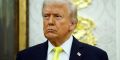


Trump said on Dec. 29 that the United States had destroyed drug storage facilities in Venezuela days earlier, describing "a big explosion" near a dock used to load drugs onto ships. He did not provide details or identify which U.S. agency carried out the operation but CNN cited government sources saying the blast was caused by a CIA drone strike, though neither the Pentagon, the CIA, nor the White House has confirmed this.
Venezuelan President Nicolás Maduro avoided addressing the incident directly on Thursday when asked by Spanish journalist Ignacio Ramonet, saying, "perhaps we'll discuss it in a few days." He added that Venezuela's defense systems had ensured territorial integrity and that "our people are safe and at peace."
Feeley said Trump's public and contradictory comments about the alleged strike undermined its effectiveness. He warned that disclosing operational details could endanger U.S. personnel. "If the theory is to show Maduro that CIA agents operate freely inside Venezuela, revealing where and when they attacked is not the best way to protect them," he said. "If the attack didn't happen, Trump will simply look confused."
Former CIA director Leon Panetta echoed those concerns on Thursday, telling The Hill that announcing a covert operation "undermines the operation itself" and "jeopardizes lives."
The reported strike would mark a significant escalation in a campaign that has included naval deployments, attacks on suspected drug-trafficking vessels, and a blockade of sanctioned oil tankers. According to U.S. figures cited by Feeley, more than 100 people have been killed in boat strikes so far.
Feeley said the show of force was unlikely to bring regime change. "A demonstration of U.S. power is not enough to overthrow Nicolás Maduro," he said, adding that while Washington holds the advantage, Trump ultimately faces three options: ground troops, airstrikes, or disengagement.
© 2025 Latin Times. All rights reserved. Do not reproduce without permission.


