
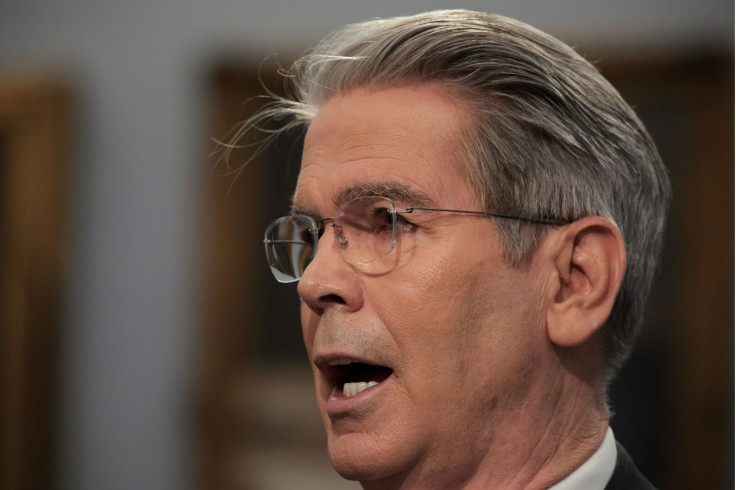
The U.S. Treasury Department has imposed new sanctions on individuals and businesses tied to Mexico's Cartel del Noreste (CDN), with Treasury Secretary Scott Bessent framing the move as part of a broader effort to disrupt the financial networks sustaining cartel operations.
In a post on X, Bessent said Treasury would "use all tools to protect our nation from violent cartels looking to reign terror on innocent Americans," adding that authorities would continue targeting revenue streams linked to fentanyl trafficking and human smuggling.
As @POTUS has made clear, Treasury will use all tools to protect our nation from violent cartels looking to reign terror on innocent Americans. Treasury will continue to target the diverse revenue streams that cartels rely on to sustain their operations, which include trafficking… https://t.co/HHZOWGZWar
— Treasury Secretary Scott Bessent (@SecScottBessent) April 14, 2026
The sanctions, announced by the Treasury's Office of Foreign Assets Control (OFAC), target six entities connected to a money laundering and cash smuggling enterprise operated by CDN, a group designated by the U.S. as a Foreign Terrorist Organization. Those designated include three individuals accused of playing central roles in the cartel's operations, as well as two casinos allegedly used to store drugs and launder illicit proceeds.
The CDN emerged around 2014 after a split within Los Zetas, one of the country's most violent cartels. Based primarily in the northeastern state of Coahuila, especially in the city of Nuevo Laredo along the U.S. border, the group is heavily involved in drug trafficking, human smuggling, extortion, and fuel theft.
According to Treasury, CDN maintains significant influence along the U.S.-Mexico border, particularly near Laredo, Texas, one of the busiest land ports of entry in the United States. Officials said the cartel uses its control of the region to facilitate drug trafficking, human smuggling and extortion, while also maintaining financial infrastructure to support those activities.
The cartel is closely linked to the Tropa del Infierno, its armed wing, which gained notoriety for its militarized tactics and violent clashes with Mexican security forces. Over the years, CDN has been engaged in ongoing turf wars with rival groups, contributing to persistent violence in northern Mexico.

Among those sanctioned by Treasury is an individual identified as overseeing human smuggling routes into Texas, described by authorities as a "gatekeeper" who coordinates migrant crossings and manages cash operations tied to the cartel.
Treasury also named a defense attorney accused of facilitating communication between imprisoned cartel leaders and active members, as well as an activist alleged to have carried out disinformation campaigns on behalf of the group.
The two casinos included in the sanctions—one located in Nuevo Laredo, just miles from the U.S. border—are described by U.S. officials as integral to CDN's financial operations. Treasury said one venue was used as a storage site for fentanyl and cocaine and as a mechanism to integrate illicit funds into the legitimate economy through gambling activities.
The action follows a broader pattern of enforcement under the Trump administration targeting CDN leadership and affiliated networks. Previous measures included sanctions against senior members, arms traffickers and individuals accused of generating revenue for the cartel through entertainment platforms.
Under U.S. law, the sanctions block any assets held by the designated individuals and entities within U.S. jurisdiction and prohibit transactions involving them. Treasury officials said the objective is to degrade the cartel's ability to finance its operations, emphasizing that disrupting financial infrastructure is central to countering organized crime groups operating across the border.


© 2025 Latin Times. All rights reserved. Do not reproduce without permission.


