
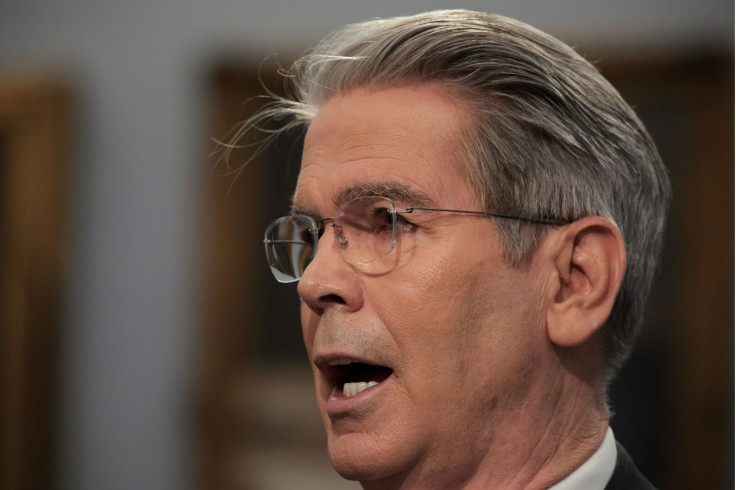
Treasury Secretary Scott Bessent said an executive order requiring banks to collect proof of citizenship from customers is "in process," signaling a potential expansion of the administration's immigration enforcement efforts into the financial system.
Speaking at a Semafor-hosted dinner in Washington, Bessent defended the proposal, saying, "I don't think it's unreasonable... Why don't we have information on who's in our banking system?"
If implemented, the measure would mark a significant shift in U.S. banking rules, where proof of citizenship is not currently required to open an account. The proposal could apply not only to new customers but also to existing account holders, according to prior reporting, raising the prospect of large-scale compliance requirements for financial institutions.
Bessent compared the proposal to practices abroad, noting, "I have a place in the UK; they want to know who lives in every apartment." He framed the initiative as a matter of transparency, though critics have argued it could be used to support broader immigration enforcement efforts.
The plan builds on discussions reported in February that the administration was considering requiring documents such as passports or birth certificates to verify citizenship. Under those proposals, commonly used identification like REAL IDs would not qualify. At the time, the White House told Semafor that reports of such policymaking were "baseless speculation," and no formal policy has been announced.
-
Undocumented Immigrants in Texas Are Increasingly Avoiding Hospitals for Fear of Detention: 'It's Not Worth the Risk'

-
Stephen Miller Says Migrant Claims 'All Fake,' Links Birthright Citizenship to 'Remittance Farming'

-
Male Immigrants, Including Undocumented Teens, Could Face Up to 5 Years in Prison for Failing to Register for U.S. Selective Service at 18


Industry groups and financial institutions have raised concerns about the feasibility and cost of implementing such a requirement. One financial services lobbyist described the idea to Semafor in February as a "complete nightmare" logistically, while another person familiar with the discussions said verifying every customer's citizenship status would be "unworkable."
Banks have also warned that requiring such documentation could disrupt access to financial services and potentially harm the broader economy.
Internal resistance has also emerged within the Treasury Department, as Bloomberg reported in March. Career staff have sought to steer political appointees toward a less stringent approach, such as having banks certify citizenship rather than collect documentation directly, according to people familiar with the matter.
The proposal could affect a wide segment of the U.S. population. As of 2025, there were about 183 million U.S. passports in circulation, compared with a population exceeding 340 million. Critics have noted that many Americans do not have ready access to documents that would satisfy a citizenship verification requirement.
© 2025 Latin Times. All rights reserved. Do not reproduce without permission.


