
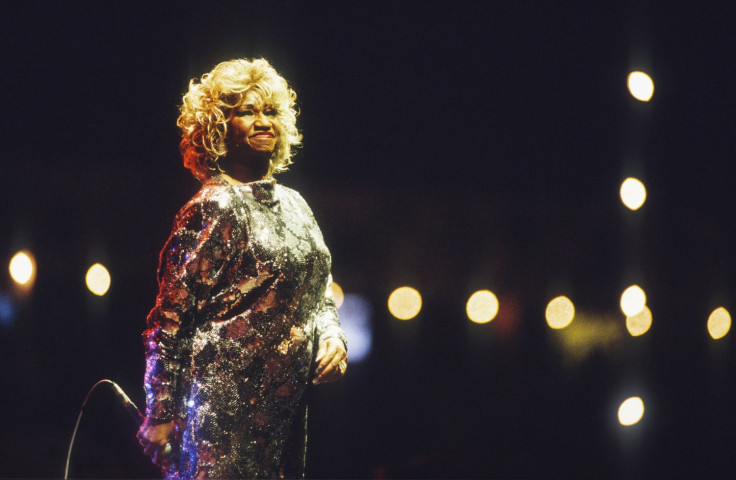
Thee Rock and Roll Hall of Fame unveiled its Class of 2026 on Monday, delivering a list full of heavyweight names, but for Latino music fans, the headline landed with two very different emotions. Celia Cruz is finally headed into the Cleveland institution, while Shakira, despite being one of this year's nominees, was left out of the final class.
This year's performer inductees are Phil Collins, Billy Idol, Iron Maiden, Joy Division/New Order, Oasis, Sade, Luther Vandross, and Wu-Tang Clan. The Hall also announced that Celia Cruz, Fela Kuti, Queen Latifah, MC Lyte, and Gram Parsons will receive the Early Influence Award. Rick Rubin, Jimmy Miller, Arif Mardin, and Linda Creed were named for Musical Excellence, while Ed Sullivan will receive the Ahmet Ertegun Award.
The ceremony is set for Nov. 14 at the Peacock Theater in Los Angeles, with a TV special scheduled to air later in December on ABC and Disney+.
For many in the Latino community, Cruz's induction carries historic weight. Born in Havana and later exiled from Cuba, the singer became one of the defining voices of salsa and a towering figure in Latin music.


La Reina de la Salsa Celia Cruz rose from her early years with La Sonora Matancera to become an international star whose music and image helped shape the sound of Afro-Cuban and Caribbean popular music far beyond Spanish-speaking audiences. Her influence stretched across generations, genres and borders, making her one of the most recognizable Latin artists in modern music history.
Her inclusion also pushes the Hall a little further toward acknowledging a truth music fans have argued for years, that the story of rock and popular music cannot be told without Latin artists who transformed rhythm, performance and crossover culture. Cruz did not just record hits. She became a symbol of diaspora, resilience and joy, carrying the sound of salsa into mainstream consciousness in the United States and around the world. In that sense, her induction feels both overdue and deeply consequential.
Still, the celebration comes with a clear footnote. Shakira was on the official 2026 ballot, and her nomination had generated excitement because it recognized her as one of the few global Latin pop stars ever seriously considered by the Hall. The Rock Hall listed her among this year's nominees, but multiple reports on Monday's final announcement confirmed she did not make the cut.
That omission is likely to reignite questions about how the Hall defines influence and which genres or markets it still struggles to fully embrace. Shakira has sold millions of records worldwide, crossed from Spanish-language rock and pop into English-language superstardom, and helped open the U.S. mainstream to a broader wave of Latin acts. Yet on the same day the Hall honored Cruz for her foundational impact, it left one of the most commercially and culturally powerful living Latina artists outside the room.
That makes Monday's announcement feel like both progress and unfinished business. Celia Cruz's name now sits where it belongs, among music's most influential legends. But Shakira's absence is a reminder that recognition for Latin artists at the highest institutional level still arrives unevenly, even when their impact is impossible to miss.
© 2025 Latin Times. All rights reserved. Do not reproduce without permission.


