
Russia's air force is emerging from the war in Ukraine as a more dangerous fighting force than many Western officials believed in 2022, according to airpower analysts who say Moscow has used the conflict to sharpen tactics, improve weapons integration, and give pilots far more combat experience than they had before the invasion.
Those warnings, published in Business Insider, cut against one of the earliest impressions of the war.
When Russia launched its full-scale invasion in February 2022, many military observers were puzzled by the poor early performance of its air arm. Reuters reported at the time that U.S. officials and analysts were surprised Russia had failed to establish the kind of air dominance many had expected, even as Ukrainian air defenses and fighter sorties complicated Moscow's campaign.
Four years later, experts say that initial underperformance may have encouraged dangerous complacency in the West. The report, citing air combat specialists, reported Friday that Russia's air force now poses a significantly greater threat to NATO than it did before the invasion because it has adapted under wartime conditions rather than collapsed under them. The outlet said Russian pilots are more seasoned, aircraft losses have been replenished in key fleets, and weapons and support systems have been refined through constant combat use.
-
Trump Seeks $1.5 Trillion Pentagon Budget After Saying the States Should Raise Taxes to Finance Day Care or Medicare

-
Trump Approval Slips as Just Over 1 in 3 Americans Have Confidence in His Leadership Erodes, Survey Finds

-
Moscow Alleges UK And France Are Preparing To Give Nuclear Weapons To Ukraine: Report


One of the clearest examples involves the Su-35, one of Russia's most important fighter jets. Analyst Justin Bronk of the Royal United Services Institute has warned that the aircraft has become more dangerous because Russia is increasingly arming Su-35 and Su-30SM2 fighters with the long-range R-37M air-to-air missile. Business Insider reported in February that the missile can reach far beyond the range of older weapons and gives Russian crews a stronger ability to threaten enemy aircraft before they can get close enough to fight back.
Bronk's broader January assessment, published by RUSI, was more measured than the headline-grabbing warnings now circulating, but it pointed in the same direction. He wrote that Russia's use of long-range missiles against Ukrainian aircraft has produced only a limited number of confirmed air-to-air kills, suggesting Moscow is not suddenly unbeatable. Still, his analysis underscored that Russia is fielding those weapons more regularly and learning how to use them in real combat, something NATO planners cannot ignore.
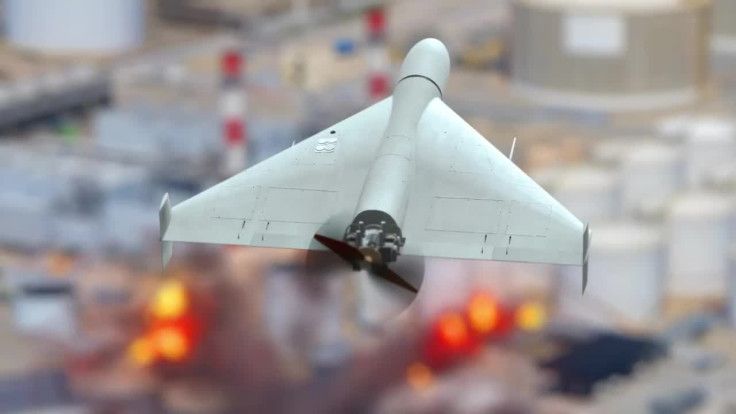
The war has also given Russia a laboratory for refining how it combines aircraft, missiles, drones, and air defenses. Reuters reported last week that Ukraine's air force said Russia is constantly modernizing its drones and changing attack routes and tactics. That matters because the danger from Russian airpower is no longer limited to fighter-versus-fighter combat. It is increasingly about the integration of glide bombs, long-range missiles, drones and layered air defense networks designed to stretch Ukrainian defenses and complicate Western planning.
Recent battlefield data points to the scale of that pressure. Reuters reported on April 1 that Russia launched more than 360 drones in a rare daytime assault, on top of hundreds more fired overnight. The Associated Press reported days later that Russia had launched more than 2,800 drones and over 1,300 bombs in a single week of attacks on Ukrainian territory. Those numbers do not prove that Russia has solved all of the weaknesses exposed in 2022, but they do show that its aerial campaign has become larger, more persistent and more technically adaptive.
For NATO, the warning is not that Russia suddenly has a perfect air force. It is that a military once mocked for stumbling through the opening phase of the invasion has had years to learn under fire. Analysts say that means Western planners should stop treating Russia's early failures as a permanent condition. A force that struggled to dominate Ukraine's skies in 2022 may still have serious limits, but in 2026 it is flying with more experience, longer reach and a deeper understanding of modern air war.
© 2025 Latin Times. All rights reserved. Do not reproduce without permission.

