
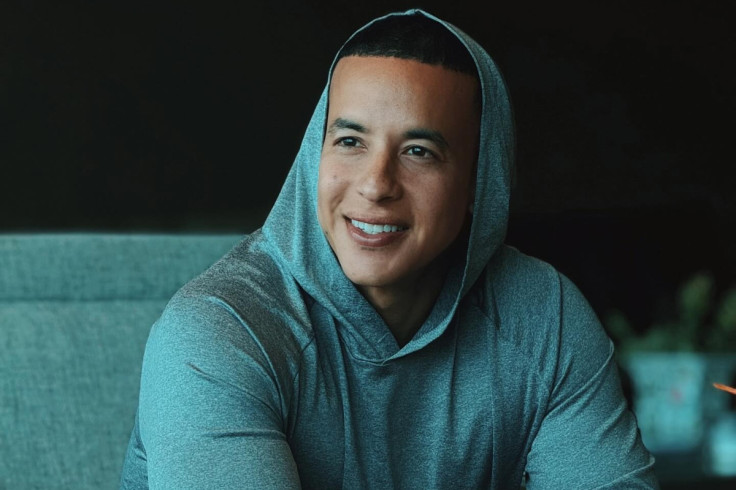
Daddy Yankee, the Puerto Rican star widely credited with helping take reggaeton from the streets of San Juan to the center of global pop culture, has been named the Latin Recording Academy's 2026 Person of the Year, becoming the first reggaeton artist to receive the honor.
The Big Boss of Latin music will be celebrated at a gala on Nov. 11 in Las Vegas during Latin Grammy Week and during the Latin Grammys ceremony and broadcast a day later.

The recognition marks a milestone not only for Daddy Yankee, born Ramón Luis Ayala Rodríguez, but also for a genre that spent years fighting for legitimacy within the Latin music establishment. In announcing the award, the Latin Recording Academy said Daddy Yankee was being honored for his nearly three-decade career, his role in the globalization of reggaeton, and his humanitarian work. Academy CEO Manuel Abud called him "a defining force in the global rise of Latin music," while Daddy Yankee said the recognition honors Puerto Rico, Latinos, and a generation that believed in the music before much of the industry did.
That last point matters. A few years ago, the relationship between Urbano artists and the Latin Recording Academy turned openly tense.
In 2019, Daddy Yankee joined J Balvin, Nicky Jam, Karol G, and others in protesting what they saw as a lack of respect for reggaeton and urbano music after major category nominations were announced with limited urban representation. The protest quickly crystallized around the phrase "Without reggaeton, there's no Latin Grammys," and Daddy Yankee publicly said that, despite being nominated, he did not agree with how the genre and many of his colleagues had been treated.
The Academy, for its part, defended its peer-voted process at the time and later moved to signal broader inclusion. In 2023, it announced new Latin Grammy categories and changes that CEO Manuel Abud said were meant to "effectively represent all the Latin music creators that we serve" and reflect "the constant evolution of our music."
That does not erase the earlier conflict, but Daddy Yankee's new honor feels, at minimum, like an unmistakable institutional embrace of a figure who once stood at the center of the genre's frustration with the Academy.
Few artists are better positioned to symbolize that shift.
From his early years in San Juan's Las Lomas and Villa Kennedy neighborhoods, Daddy Yankee built a career that changed the commercial trajectory of urban Latin music. The Academy's own biography of the award notes that 2004's Barrio Fino became a turning point, selling more than 8 million copies and spending 24 consecutive weeks at No. 1 on the Billboard Top Latin Albums chart, while 'Gasolina' helped blast reggaeton into the international mainstream. His Latin Grammy page currently lists 7 wins and 32 nominations through the 26th annual awards.
His career has long stretched beyond a single album or a single club anthem. Daddy Yankee became a bridge figure between Puerto Rican reggaeton's underground roots and its polished, global era, later contributing to crossover smashes that helped make Latin music a permanent force on worldwide charts. That is a big reason this latest recognition reads as both personal and historic. It is about a star, yes, but it is also about the genre he helped force into rooms that once seemed reluctant to open the door.
The honor also comes after one of the most closely watched reinventions in Latin music. In late 2023, at the final stop of his farewell tour in Puerto Rico, Daddy Yankee told fans he was dedicating his life to Christ and said he would begin a new chapter centered on faith. CBS News reported that he said Christ lived in him and that he would live for Him, while ABC News reported in November 2025 that the artist had returned to music saying, "God brought me back with a mission."
That shift has marked a visible departure from the image that defined his ascent as reggaeton's "Big Boss."
The Latin Recording Academy's announcement itself refers to his "most recent phase" as a creative direction focused on spiritual reflection, ethical values, and personal transformation. In other words, the artist being honored in 2026 is not just the hitmaker behind 'Gasolina' or the architect of Barrio Fino. It is also a veteran star trying to rewrite what the second half of a Latin music empire can look like.
-
INTERVIEW - Chiquis Says 'Sin Filtro 2' Shows What She's Been Hiding From Social Media and Surprises About Her Family and Career

-
Inside Latin America's loudest, proudest musical showcases: The power of Mexico´s Vive Latino and Amazon Music's Role

-
INTERVIEW - Kenia OS Responds to the Rumors, Reveals What Peso Pluma Smells Like, and Wins the Crown of the New Queen of Mexican Pop


© 2025 Latin Times. All rights reserved. Do not reproduce without permission.

