
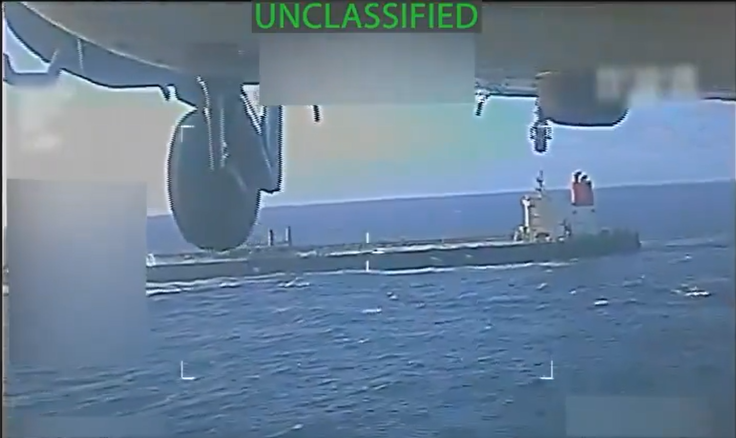
The U.S. seizure of a supertanker loaded with Venezuelan crude is expected to force black-market buyers to demand even deeper discounts, further tightening financial pressure on authoritarian President Nicolás Maduro's government, according to energy analysts consulted by The Conversation.
The Dec. 10 operation involved U.S. forces boarding the Skipper, a 20-year-old vessel capable of carrying nearly 2 million barrels of oil. Washington said the tanker had been used to move sanctioned Venezuelan and Iranian crude, while Caracas condemned the action as "international piracy."
Francisco J. Monaldi, an energy policy specialist at Rice University, told The Conversation that the impact on Venezuela's informal oil trade could be significant. He noted that the Skipper was likely bound for China via intermediaries, not Cuba as the Trump administration suggested, given the tanker's size. Most Venezuelan crude is sold on the black market through a "shadow fleet" that obscures cargo origins to avoid sanctions.
Venezuela relies heavily on this system. Analysts estimate that more than 80% of its exports go to independent refiners in China, while official data from the government has not been published in seven years. Oil accounts for more than half of state revenue and about 20% of the country's GDP.
-
British Politician Jeremy Corbyn Agrees With Venezuela, Claims U.S. Seizure Of Tanker Near Its Coast Is An 'Act Of Piracy'
-
Venezuela's Maduro Claims The Country Has 'Four Months Worth Of Food And Three Of Medicine, Just In Case'

-
U.S. Lawmakers Condemn Trump's Seizure of Venezuelan Oil Tanker: 'Sleepwalking Us Into a War'


With U.S. authorities now signaling a broader crackdown, buyers are expected to demand steeper discounts to compensate for higher seizure risks. "Very few buyers will be willing to prepay," Monaldi said, noting that a cargo of this size is worth about $100 million even at discounted rates. Instead, buyers will expect Venezuela to absorb part of the risk, likely reducing government revenue.
Reuters reported on Thursday that roughly 30 additional tankers operating near Venezuela could be targeted due to sanctions concerns. U.S. officials have indicated they intend to continue the campaign, though the pace will depend on port availability to receive seized ships.
Global oil prices showed little reaction the day after, Reuters reported, as Venezuela represents only around 1% of world supply and broader market movements remain tied to Russia-Ukraine peace talks, U.S. Federal Reserve decisions, and inventory levels. Analysts said Venezuelan crude, however, is likely to face sharper price declines due to growing risk premiums.
Further disruptions to Venezuela's export volumes could also depress production, which has slowly recovered to about 1 million barrels per day after collapsing during the pandemic and earlier sanction rounds.
Monaldi said the combined effect — steeper discounts, reduced prepayment, and possible output declines — will tighten financial strain on Maduro's government as U.S. enforcement intensifies.
© 2025 Latin Times. All rights reserved. Do not reproduce without permission.


