
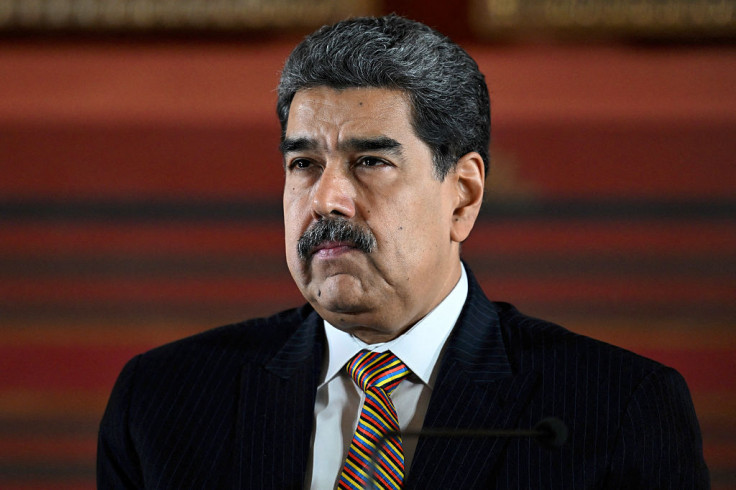
Cardinal Pietro Parolin, the Vatican's secretary of state, pressed the United States for clarity on its plans for Venezuela and raised a possible Russian asylum option for Nicolás Maduro days before a U.S. special operations raid captured the Venezuelan leader, according to government documents obtained by The Washington Post.
The documents describe a Christmas Eve meeting in which Parolin summoned Brian Burch, the U.S. ambassador to the Holy See, to ask whether Washington intended to target only drug traffickers or pursue regime change. Parolin agreed Maduro "had to go," the documents say, but urged the United States to offer him an exit.
According to the account, Parolin told Burch that Russia was prepared to grant Maduro asylum and asked the United States to show restraint while intermediaries tried to move him toward that offer. "What was proposed to [Maduro] was that he would go away and he would be able to enjoy his money," said a person familiar with the Russian discussions. "Part of that ask was that [President Vladimir] Putin would guarantee security."
A week later, Maduro and his wife were seized by U.S. forces and flown to New York to face drug trafficking charges, after an operation that killed about 75 people, the report said. The Post described Parolin's outreach as part of wider, unsuccessful efforts—also involving Russians, Qataris, Turks and others—to steer Maduro into exile and avoid U.S. military action.
-
Venezuela's Interim Government Announces 'Significant' Release of Political Prisoners, Signaling Shift After Maduro's Capture
-
JD Vance Signals Conditional U.S. Support for Venezuela: 'Whoever the Leader of That Country Is, Is Going to Have to Play Ball'

-
Trump Cancels Planned Second Wave of Venezuela Attacks After Interim Government Pledges Prisoner Releases: 'Will Not Be Needed'


In a statement to The Post, the Vatican press office said it was "disappointing" that parts of a confidential conversation were disclosed and argued the reporting did not accurately reflect the discussion. The State Department declined to comment, and Kremlin spokesman Dmitry Peskov did not respond to a request for comment, according to the report.
The Post said the Trump administration was simultaneously coalescing around a plan to work with Maduro's deputy, Delcy Rodríguez, during a transition. A senior White House official and another person familiar with the matter said the shift was influenced by a classified CIA assessment, previously reported by The Wall Street Journal, that concluded Maduro loyalists were better positioned to manage a post-Maduro government than opposition leader María Corina Machado.
On Friday, Pope Leo XIV warned that the post-World War II principle barring countries from violating one another's borders has been "completely undermined," and cited "escalating tensions" in the Caribbean while calling for the "will of the Venezuelan people" to be respected. "War is back in vogue and a zeal for war is spreading," he told diplomats at the Vatican.
© 2025 Latin Times. All rights reserved. Do not reproduce without permission.


