
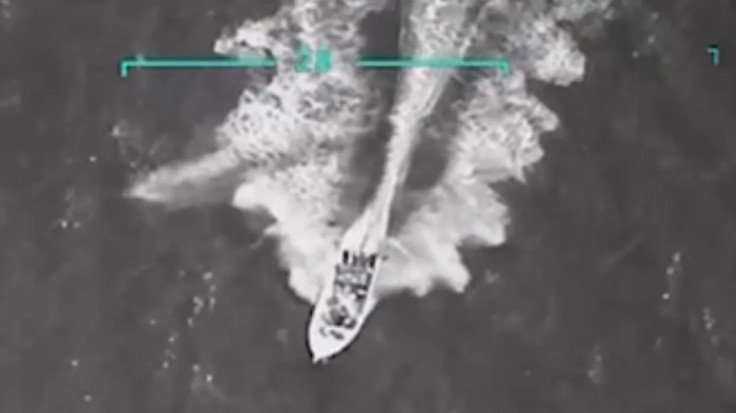
An boat targeted by the U.S. military as part of its campaign against drug-trafficking in the Caribbean and Eastern Pacific was carrying marijuana, according to a new report.
The New York Times detailed that the packages washed ashore two days after an attack that took place on November 6 in the Gulf of Venezuela, where Colombia and Venezuela have long disputed the maritime boundary, and appears to be the first physical evidence of the campaign being carried out by Washington.
Every other struck boat, the outlet said, is presumed to have sunk along with the crew and cargo. The attack in question killed three people and took place in international waters, according to a publication from Defense Secretary Pete Hegseth back then.
The bodies were found two days after by fishermen. "The boat itself smelled like burned meat," Aristotele Palmar Garcia, a local police inspector, told the outlet. "We had to bury them because the vultures and stray dogs were beginning to eat them," he added.
The Trump administration has now carried 30 strikes against alleged drug vessels in the Caribbean and Eastern Pacific following the latest attack on Monday.
Two people were killed in the latest attack, which took place in the Eastern Pacific, according to the U.S. Southern Command, bringing the death toll to at least 107.
The Trump administration has told Congress it considers itself to be in an "armed conflict" with drug cartels and has labeled those killed as "unlawful combatants," citing a classified Justice Department finding that it says permits lethal action without judicial review, as CNN explains.
The operation has drawn growing criticism from legal experts and lawmakers, particularly over a follow-up strike on Sept. 2 that killed two survivors of an initial attack, with several experts have said that second strike could constitute an extrajudicial killing under international law. Hegseth has rejected declassifying the footage and won't release it publicly.


© 2025 Latin Times. All rights reserved. Do not reproduce without permission.


