
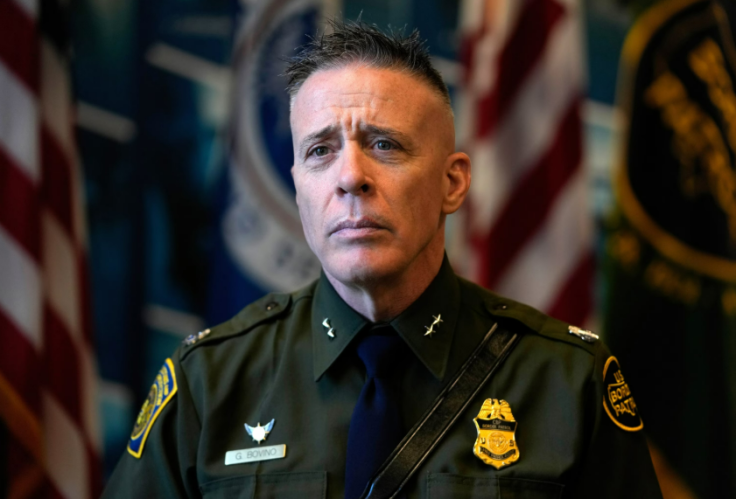
Gregory Bovino, the outgoing Border Patrol official who became a central figure in the Trump administration's immigration crackdown, said he has few regrets about his heavy-handed approach, stating in an interview with The New York Times that he "wish[ed] I'd caught even more illegal aliens" and that enforcement efforts could always go further.
His remarks come as he prepares to retire following a turbulent tenure marked by aggressive tactics, internal criticism and multiple investigations.
Bovino, who until January served in an unusual "commander at large" role reporting directly to then–Homeland Security Secretary Kristi Noem, defended the strategy he helped implement during a nationwide surge in immigration enforcement, describing it as "total border domination."
He added that softer approaches favored by others in government failed to deliver results. "I'm not going to 'control' it," he said. "We're going to dominate the hell out of that damn place."
His tenure coincided with a series of high-profile operations in cities including Los Angeles, Chicago and Minneapolis, where federal agents deployed tear gas, conducted large-scale raids and responded to protests, drawing legal challenges, political backlash and scrutiny from within the Department of Homeland Security. In Minneapolis, two U.S. citizens were killed during enforcement actions, intensifying criticism and prompting the administration to scale back the initiative.


According to a report last week from The Daily Beast, Bovino opted to retire after being reassigned to his previous post in California and facing multiple investigations into his conduct. One inquiry centers on remarks he allegedly made about a federal prosecutor's observance of Shabbat, while others involve his use of force during protests, including an incident in which he was filmed deploying tear gas toward demonstrators.
Despite the controversies, Bovino rejected the notion that his methods were excessive, arguing that his "turn and burn" tactics — a departure from intelligence-led enforcement — were necessary to maximize arrests and deter unlawful crossings. Over nearly three decades in the agency, he built a reputation for testing legal boundaries and prioritizing volume of apprehensions, a strategy that drew both support from subordinates and criticism from colleagues.
Former officials described him as a polarizing figure whose confrontational style and disregard for protocol created internal friction. A report published by the Project On Government Oversight, analyzing enforcement data from 2022 to 2025, found that his sector used force more frequently relative to arrests than others in the agency.
Even as the administration signaled a shift toward a less aggressive posture, Bovino maintained that he did not go too far. "We went as hard as we could," he said. "But there's always a creative and innovative solution to catching even more."
© 2025 Latin Times. All rights reserved. Do not reproduce without permission.


