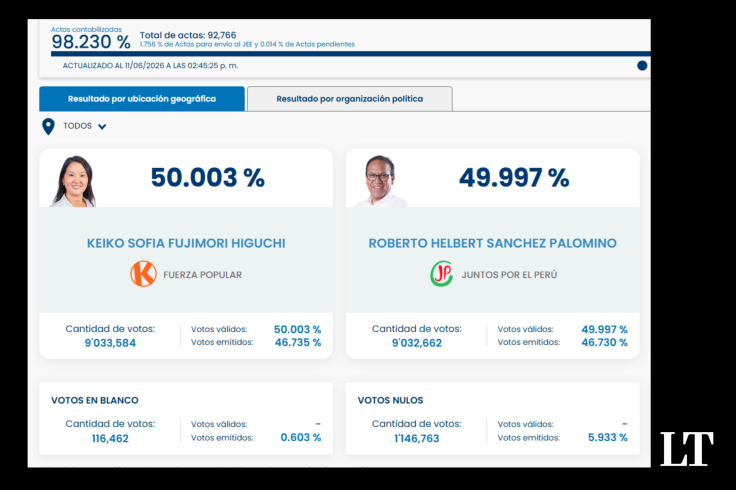
Peru's presidential election has plunged into a state of sheer cinematic suspense, transforming a dramatic early surge for leftist congressman Roberto Sánchez into a heart-stopping photo finish. According to the latest real-time data released by electoral authorities, Fuerza Popular leader Keiko Fujimori has staged a stunning comeback, overtaking her rival to hold a razor-thin lead of just 922 votes. With more than 98.23% of polling centers officially tallied, the Andean nation finds itself in an absolute technical tie that has reached a boiling point, with Fujimori currently edging ahead with 50.003% of valid votes against Sánchez's 49.997% in a minuscule mathematical fluctuation keeping the entire region on edge.
This radical shift in the numbers stems directly from the ongoing tallying of the overseas vote, a factor that analysts had already anticipated because Peruvian communities living abroad historically lean heavily toward conservative, market-friendly candidates. This is particularly true for the 710,000 residents in the United States spread across New York, New Jersey, Florida, and Virginia, whose decisive ballots are currently being flown into Lima after smooth voting operations across 119 consular offices worldwide. However, a definitive declaration of the winner could still take several weeks due to strict electoral laws demanding the physical transport of each tally sheet, alongside a meticulous review of over 1,500 challenged ballots, a legal process that could delay the official proclamation well into July.
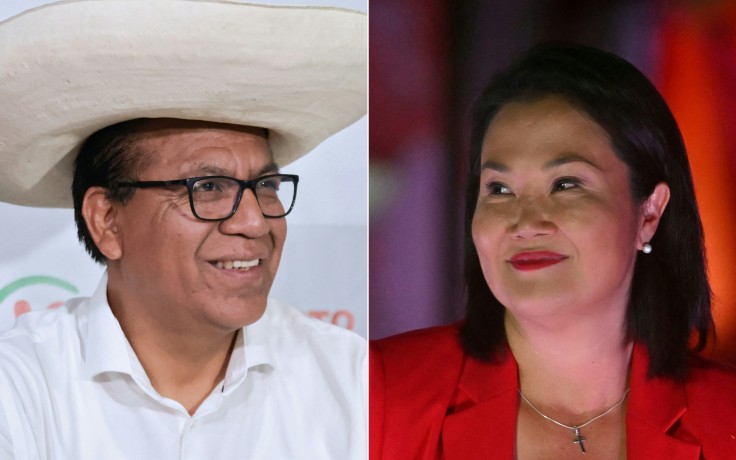
The bitter standoff between the 51-year-old Fujimori and the 57-year-old Sánchez represents a critical referendum on Peru's socioeconomic future rather than a simple political race. Fujimori has anchored her platform on an uncompromising tough-on-crime strategy, vowing to deploy the military to combat the rampant extortion plaguing urban areas, though her movement remains shadowed by the authoritarian legacy of her late father, Alberto Fujimori.
Conversely, Sánchez, a trained psychologist backed by Juntos por el Perú, has energized rural and indigenous voters in the highlands by promising deep structural reforms, anti-poverty measures, and a brand-new constitution, despite facing sharp criticism over his campaign promise to pardon imprisoned former President Pedro Castillo.
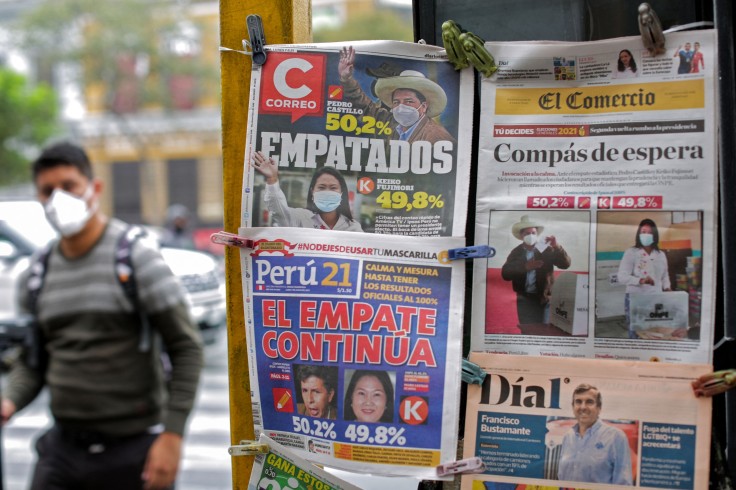
Whoever ultimately secures the presidency will face the monumental challenge of governing a deeply fractured nation, becoming Peru's ninth head of state in a single decade. Political experts warn that this razor-thin margin ensures the incoming leader will inherit profound societal divisions, facing immediate opposition from nearly half of the country on day one. Compounding this gridlock is a newly restored bicameral legislature where neither candidate commands an absolute majority, forcing the incoming administration into relentless coalition-building with centrist factions just to pass basic legislation as an anxious nation waits for the final, decisive votes to be counted one by one.


© 2025 Latin Times. All rights reserved. Do not reproduce without permission.


