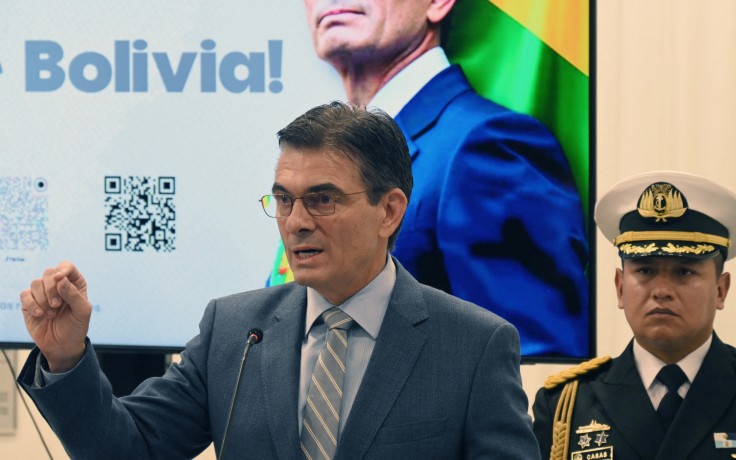
Bolivian President Rodrigo Paz delivered his most personal and pointed message yet to former President Evo Morales on Tuesday night, telling CNN in a late-night interview that Morales "doesn't sleep well at night because he knows justice is coming for him" — and dropping a striking hint that his arrest could happen very soon.
The interview, conducted by CNN's Fernando del Rincón and shared widely on social media, marks a notable shift in tone from Paz, who has consistently emphasized dialogue over confrontation since the crisis began. While his public posture has been measured, these words were anything but.
'He Doesn't Sleep Well' — Paz Goes Personal
"He doesn't sleep well every night, and I say this directly to Evo Morales," Paz told CNN. "He doesn't sleep well because he believes every night they are going to come looking for him, because he knows he is guilty of something."
The remark is significant not just for its directness, but for what it reveals about the psychological dimension of the standoff. Rather than speaking about Morales as a political adversary to be managed, Paz spoke about him as a man cornered by his own conscience — a man, in his telling, who is not directing a righteous movement but running from accountability.
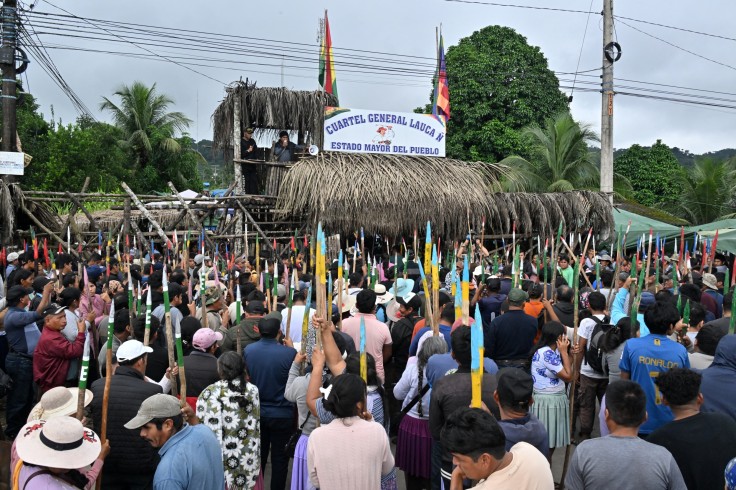
Paz acknowledged the legal paradox at the heart of the crisis: Morales carries a second arrest warrant, is officially considered a fugitive, and is holed up in the Chapare — his political stronghold in Cochabamba — surrounded by layers of loyal supporters. And yet he remains free.
"I spoke with the attorney general of the country about two weeks ago," del Rincón said, "and I asked him why the warrant hasn't been executed. He tossed that responsibility to the National Police. The Police said they can't. So I ask: who is going to deliver justice? Because in the end, this is someone who is on national territory, who is protected, who is fortified in Cochabamba, and there's no one to bring him out."

'Morales Does Not Deserve One More Death'
Paz was unambiguous: Morales will face justice. But he framed his restraint not as weakness, but as a moral commitment — one rooted in Bolivia's painful history of political violence.
"Evo Morales is going to go to justice," president Paz said. "What Morales does not deserve is one more death. During his 20 years, there were 180 deaths. This was a country with a heavy hand under his rule, with many trials. He tried to put me through 16 legal processes and I stayed. Others left Bolivia — I stayed."
The personal note is telling. Paz is not a detached technocrat commenting on a legal process — he is a man who survived the same authoritarian machinery he is now being asked to wield. His refusal to use lethal force is, in his own framing, a deliberate repudiation of the template Morales himself set.
"What I cannot grant, ladies and gentlemen, is one more dead body over a territory that today is not the only place without sovereignty — there are many territories in Bolivia where there is no sovereignty, and we are recovering it," he said. "Part of this conflict is precisely about reclaiming sovereignty in Bolivia."
The Bombshell: 'Maybe This Weekend'
The most explosive moment of the interview came when Paz appeared to suggest that Morales' arrest — or some major legal development — could be imminent.
"We caught the most important drug trafficker in this part of the continent without anyone knowing," he told CNN, in what appeared to be a reference to a covert operation not yet made public. "And I'll tell you something — maybe this weekend, maybe by the end of the month — we'll see when."
He declined to elaborate, but the implication was clear: the government has the operational capacity to move quietly and decisively when it chooses, and it is choosing its moment carefully.
"Before the year ends, Evo Morales faces justice," Paz stated. When pressed, he added: "This is a commitment of this government."
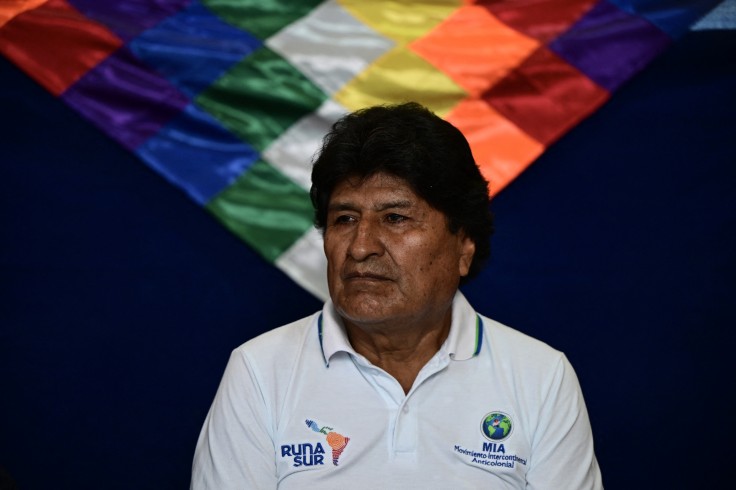


The 'Turquitos' Warning
In a moment that has since gone viral in Bolivia, Paz ended the interview with a cryptic warning directed at what he called the "turquitos" — a Bolivian expression, he clarified, not an ethnic slur — apparently referring to Morales' inner circle or the networks protecting him.
"The turquitos are going to make a mistake at some point with their information," Paz said. "And sooner or later, their turquitos are going to slip up — and he will stand before justice."
The remark suggests the government believes Morales' protective bubble has vulnerabilities — informational or logistical — and is waiting for the moment those vulnerabilities are exposed.
A 'Cult,' a Minor, and a Legal Wall
Paz also spoke in unusually frank terms about the nature of Morales' support base, describing it in terms that go beyond political loyalty.
"He has a complex entourage of followers and congregants," Paz said. "It's a kind of — you could call it a sect — that defends him to the death, even knowing that the accusation involves his relationship with a 14-year-old minor and having a child with that minor. Even knowing he did something wrong, they still defend him."
Prosecutors are seeking a maximum sentence of 20 years in the case, which centers on allegations that Morales had a sexual relationship with a minor while he was president, resulting in a child. Morales has denied the allegations and called the prosecution politically motivated "lawfare." The Paz government has also separately announced it is seeking information from U.S. judicial authorities to investigate Morales' alleged links to drug trafficking networks.
Dialogue Remains the Line — For Now
Despite the sharp personal rhetoric, Paz was careful to maintain his broader positioning as a president who governs through law rather than force. He acknowledged the diversity of opinion around him — some advisors urging a heavy hand, others urging dialogue — and cast his approach as a reflection of Bolivia's complex social fabric.
"This is not a homogeneous country," he said. "There is diversity of culture, diversity of understanding. To reach a line of understanding across all sectors — some people tell me, Rodrigo, use a heavy hand. Others say, use dialogue. Well, this is a diverse country, and what Rodrigo Paz is doing is enforcing the law — but without a single additional death in the name of this man."
In a separate CNN interview earlier this week, Paz also confirmed that a state of exception remains on the table, though he framed the Constitution itself as the limit beyond which he will not compromise.
What Tuesday night's interview made unmistakably clear is that Paz is no longer simply playing defense. He is, in his own words, in the process of recovering sovereignty — inch by inch, territory by territory — and he is sending Morales a message that the clock is running out. Whether it runs out this weekend, or next month, or before year's end, he is determined it will run out.
© 2025 Latin Times. All rights reserved. Do not reproduce without permission.


