
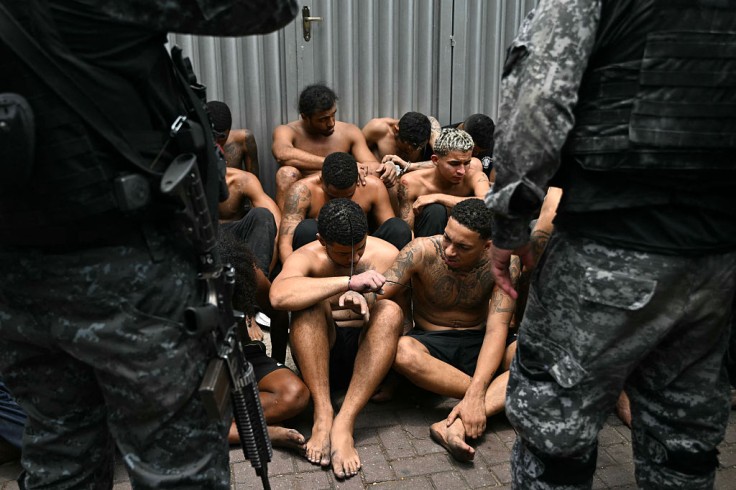
The United States on Thursday designated Brazil's Comando Vermelho (CV) and Primeiro Comando da Capital (PCC) as Specially Designated Global Terrorists and said it intends to formally classify both groups as Foreign Terrorist Organizations effective June 5, expanding Washington's campaign against transnational criminal groups in Latin America.
In a statement, the U.S. State Department described the PCC and CV as "two of the most violent criminal organizations in Brazil," saying they command "thousands of members" and have carried out attacks against police officers, public officials and civilians. The department said both groups operate beyond Brazil's borders and are involved in illicit networks reaching into the United States.
"The Trump Administration will continue to use all available tools to protect our nation and our national security interests by keeping illicit drugs off our streets and disrupting the revenue streams funding violent narco-terrorists," the State Department said.
The announcement marks a significant escalation in how Washington categorizes organized crime groups in South America and comes amid broader U.S. efforts to increase pressure on criminal organizations tied to drug trafficking and regional violence.
-
Guatemala Agrees to Joint U.S. Strikes Against Drug Traffickers in Major Expansion of Trump's Latin America Campaign

-
U.S. Lawmakers Demand Pentagon Halt Alleged Anti-Drug Operations in Ecuador, Suggest They May Involve Forces Accused of Torture
-
Brazil's PCC prison gang is becoming a global cocaine powerhouse, with reach into Europe and the U.S


The PCC and CV are Brazil's two largest criminal factions and have spent years fighting for control of drug trafficking routes, particularly through the Amazon region and key border corridors linked to cocaine shipments moving toward Europe and other international markets.
The CV, founded in Rio de Janeiro's prison system during Brazil's military dictatorship in the 1970s, originally emerged among common criminals and political prisoners housed together in Ilha Grande prison, according to reporting by BBC News Brasil.
Over the decades, the group expanded from bank robberies into cocaine trafficking and territorial control across Rio's favelas and other states. Researchers cited by the BBC said the faction increased its territorial presence in Rio's metropolitan region in recent years even amid large-scale police operations.
The PCC on the other hand was founded in São Paulo prisons in 1993 following the Carandiru prison massacre, where more than 100 inmates were killed by security forces.
According to InSight Crime, the group evolved into Brazil's largest criminal network, with operations extending across nearly every Brazilian state and into neighboring countries, Europe and parts of Asia. The organization has also been linked to international money laundering, arms trafficking and relationships with foreign criminal groups, including the Italian mafia group 'Ndrangheta.
The two groups maintained periods of cooperation before a major split in 2016 triggered prison riots and waves of violence across Brazil.
© 2025 Latin Times. All rights reserved. Do not reproduce without permission.


