
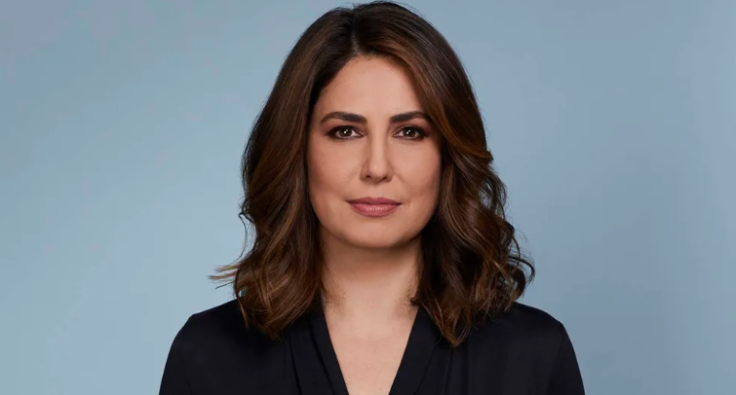
For decades, getting a correspondent chair at '60 Minutes' was considered one of the most difficult achievements in American journalism. Then Cecilia Vega made history.
When CBS News hired Vega in 2023, the former ABC News chief White House correspondent became the first Latina correspondent in the legendary program's history, breaking a barrier that had stood for more than half a century.
Now, just three years later, Vega is out at '60 Minutes' as part of the massive upheaval reshaping CBS News under new leadership. Multiple reports on Thursday confirmed that Vega was among the high-profile departures tied to a sweeping restructuring at the iconic newsmagazine.
The exit closes a short but symbolic chapter for Latino representation in television journalism, because Vega's importance was never just about one job. She represented a Latino voice, representation, and visibility.
Born in San Francisco to a Mexican American family, Vega built her career the old-school way: local newspapers, local television, breaking news, political reporting and relentless field work. Before network fame, she worked at the San Francisco Chronicle and local ABC affiliate KGO-TV, eventually joining ABC News in 2011.
Over the next decade, viewers watched Vega evolve into one of the country's most recognizable political correspondents. She covered the Obama administration, Hillary Clinton's presidential campaign, the Trump White House and later became ABC News' chief White House correspondent during the Biden administration.
-
Jorge Ramos Makes Digital Journalism History at News Emmys With "Así Veo las Cosas"

-
Nicolas Cage Intimidated Her at First, Then Karen Rodríguez Created Marvel's Most Unexpected Latina Heroine in Spider-Noir - INTERVIEW

-
Diego Boneta's Fidel Castro Transformation in 'Killing Castro' Started With the Team Behind Luis Miguel - EXCLUSIVE


But for many Latino journalists, one moment carried special weight: seeing Vega walk into '60 Minutes.'
The program, often described as the gold standard of television journalism, had never had a Latina correspondent despite generations of Latino reporters helping shape American newsrooms. Vega's hiring was widely celebrated across journalism organizations and Latino media circles.
In 2024, the National Association of Hispanic Journalists named Vega National Latina Journalist of the Year, recognizing both her reporting and the cultural significance of her rise inside mainstream television news.
Her presence mattered, especially because 60 Minutes has historically represented a very exclusive corner of broadcast journalism, one associated with institutional authority, prestige, and influence. For many Latino viewers and young reporters, Vega's appointment signaled that those spaces were finally beginning to open.
And she understood the symbolism herself.
In previous interviews, Vega spoke openly about growing up rarely seeing Latina journalists in high-profile national roles and wanting younger generations to understand they belonged in those rooms too.
That is partly why her departure lands differently inside Latino media circles.
CBS News has not publicly framed Vega's exit as performance-related. Instead, it appears connected to a much broader transformation underway at the network. Reports describe major leadership changes, editorial battles and the arrival of new executives seeking to remake 60 Minutes for a fragmented digital era.
The shakeup has already triggered backlash inside journalism circles, particularly after the departures of veteran correspondent Sharyn Alfonsi and longtime executive producer Tanya Simon.
Still, Vega's departure carries a distinct emotional layer because of what she represented beyond CBS.
For years, Latina journalists in national television news have often been treated as exceptions instead of institutional fixtures. Vega helped normalize something that should never have been unusual in the first place: a Latina journalist leading political coverage, interviewing presidents and reporting for one of the most influential news programs in American history.
Her career also challenged long-standing stereotypes about who gets to embody authority on television news. Vega was never boxed into entertainment coverage or cultural reporting. She became one of the defining political journalists of her generation, pressing White House officials, covering elections and reporting on some of the most consequential stories in modern American politics.
That legacy does not disappear because she no longer works at 60 Minutes, It's actually the oposite, as it becomes clearer now, because Cecilia Vega's real impact was not only becoming the first Latina correspondent at 60 Minutes. It was making sure she would not be the last.
© 2025 Latin Times. All rights reserved. Do not reproduce without permission.


