
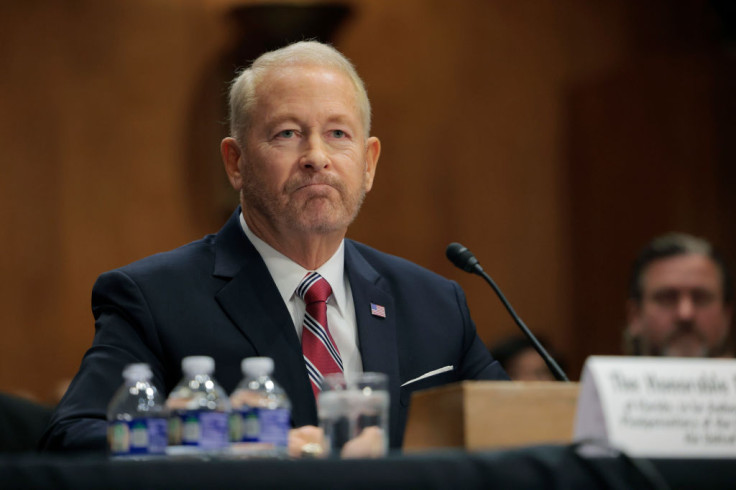
Ronald Johnson, the U.S. ambassador to Mexico, celebrated the killing of Nemesio Ruben Oseguera Cervantes, known as "El Mencho," the longtime leader of the Cártel Jalisco Nueva Generación (CJNG), on Sunday.
In a social media publication, Johnson commended the government and security forces for their "professionalism and determination in the operation directed against" El Mencho, leader of a "narco-terrorist organization responsible for the trafficking of fentanyl and generating violence in our communities."
"I express my respect and solidarity with Mexican officials and law enforcement officers facing these criminal groups every day, often at a high personal risk. The operation underscores a clear reality: the criminal organizations poisoning our people and threatening our nations will be held accountable," Johnson added.
Reconocimiento a las Fuerzas de Seguridad de México y a la Cooperación Bilateral 🇺🇸🇲🇽 pic.twitter.com/GtFGbPELwS
— Embajador Ronald Johnson (@USAmbMex) February 23, 2026
"Under the leadership of President Trump and President Sheinbaum, bilateral cooperation has reached unprecedented levels. The U.S. stands firm with Mexico in this shared responsibility and effort."
Mexican authorities have also confirmed that there was cooperation with the U.S. in the operation that killed El Mencho. The country's Defense Secretariat said that "for the execution of the operation, as well as central military intelligence tasks, within the framework of bilateral coordination and cooperation with the U.S., there was complementary information from the country's authorities."
The information is noteworthy because of tensions about President Donald Trump's insistence on sending troops into the country to fight cartels, with Sheinbaum drawing a red line on the matter.
There was no information about U.S. troops being on the ground during the operation that killed El Mencho, one of the most consequential blows to a major Mexican criminal organization in years.
According to reports from the AP, the operation occurred in the western state of Jalisco and was followed by roadblocks and burning vehicles, a tactic frequently used by cartels to slow security forces. The strike was part of an operation in the mountains of Jalisco and was framed as a major security success for President Claudia Sheinbaum's government.
Oseguera Cervantes rose from local criminal networks into the top tier of Mexico's underworld, becoming the face of CJNG's rapid expansion. The cartel emerged after fractures in earlier organizations, and over time built a reputation for combining sophisticated trafficking with aggressive territorial violence, as well as diversification into other illicit businesses.
According to In Sight Crime, CJNG is not just a cartel. It has been described by U.S. officials and researchers as a network that grew by absorbing or partnering with existing criminal cells in multiple regions, which is one reason "decapitation" events can trigger unpredictable splintering.


© 2025 Latin Times. All rights reserved. Do not reproduce without permission.


