
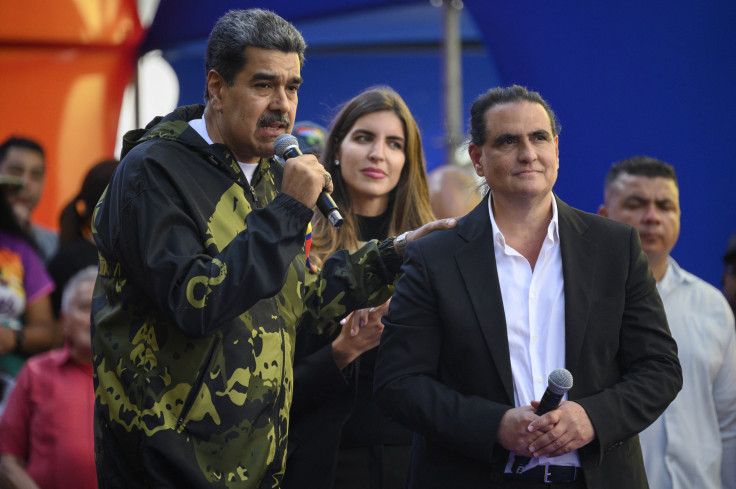
MIAMI - The Venezuelan government deported businessman Alex Saab to the United States, marking a dramatic reversal for a man once celebrated by Nicolás Maduro's government as a political prisoner and anti-sanctions hero.
The move comes less than three years after former President Joe Biden granted Saab clemency as part of a controversial prisoner swap involving Americans detained in Venezuela. Saab had been extradited to Miami in 2021 after his arrest in Cape Verde on U.S. money laundering charges tied to alleged corruption in Venezuela's government food program.
Now, after Maduro's collapse earlier this year and the emergence of a new government in Caracas, Saab is once again headed toward the U.S. justice system, this time under circumstances that analysts say are almost unprecedented.
COMUNICADO
— Miguel Ángel Pérez Pirela (@maperezpirela) May 16, 2026
El Gobierno de la República Bolivariana de Venezuela informa la deportación del ciudadano de nacionalidad colombiana Alex Naim Saab Morán, llevada a cabo este 16 de mayo de 2026 en cumplimiento de las disposiciones normativas de la legislación migratoria venezolana.… pic.twitter.com/7h8jzN3BJo
Venezuela's migration agency, SAIME, said Saab was "deported," not extradited, citing ongoing U.S. criminal investigations against him. The government did not initially specify where he was sent, but Reuters and other outlets reported Saab was being transferred to the United States and expected to face proceedings connected to federal cases in Miami.
The distinction between deportation and extradition could become legally important. Also, Saab was a naturalized Venezuelan citizen. Venezuela has no extradition treaty with the U.S. This could mean that Colombian-born Saab was stripped of his Venezuelan citizenship, so he could be deported from Caracas.
Also, extraditions usually involve treaty protections and lengthy judicial procedures. Deportations can move much faster and may allow prosecutors greater flexibility depending on how the transfer was arranged. Legal experts are expected to closely watch Saab's first court appearances in South Florida for clues about whether the U.S. intends to revive older charges, pursue new ones, or seek cooperation from the former Maduro insider.


Saab became one of the most controversial figures tied to Maduro's inner circle. U.S. officials long accused him of helping Venezuela evade sanctions through complex international business networks involving food imports, oil transactions, and shell companies. Maduro's government repeatedly denied wrongdoing and portrayed Saab as a diplomat unfairly targeted by Washington.
His arrest in Cape Verde in 2020 sparked a yearslong diplomatic battle between Caracas and Washington. Maduro suspended negotiations with Venezuela's opposition after Saab's extradition and repeatedly demanded his release.
When Saab returned to Venezuela in late 2023 after Biden's clemency deal, he was welcomed publicly by Maduro and later named industry minister.
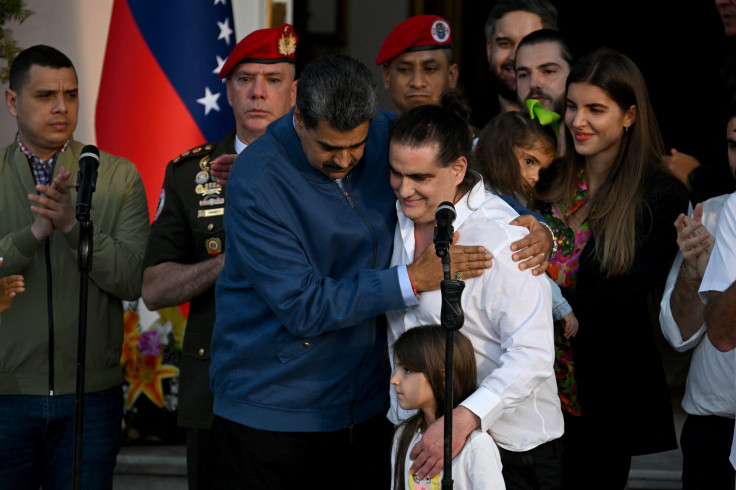
But Saab's fortunes shifted quickly after Maduro was captured by U.S. special forces earlier this year during the political upheaval that transformed Venezuela's leadership structure, according to Reuters and AP reports. Saab reportedly disappeared from public view in February amid reports of a joint operation involving U.S. and Venezuelan authorities.
Saturday's announcement confirmed that Saab was no longer under the protection of the Venezuelan state that once defended him aggressively on the world stage.
The Associated Press reported that Saab may now become a key witness in broader U.S. investigations tied to Maduro's alleged corruption and narcotrafficking networks. Reuters also reported that sources familiar with the matter believe Saab could provide information useful to prosecutors building cases connected to Venezuela's former leadership.
The political symbolism is enormous.
For years, Saab was viewed as one of the most powerful non-elected figures in Chavismo, often described by U.S. officials as Maduro's financial operator or "bagman." His return to U.S. custody after once receiving clemency from Washington underscores how dramatically Venezuela's political landscape has changed in just a few months.
It also raises major unanswered questions about the limits of presidential pardons and prisoner swap agreements when political regimes collapse and new investigations emerge.
As of Saturday evening, U.S. authorities had not publicly detailed what charges Saab could now face in Miami.
© 2025 Latin Times. All rights reserved. Do not reproduce without permission.


