
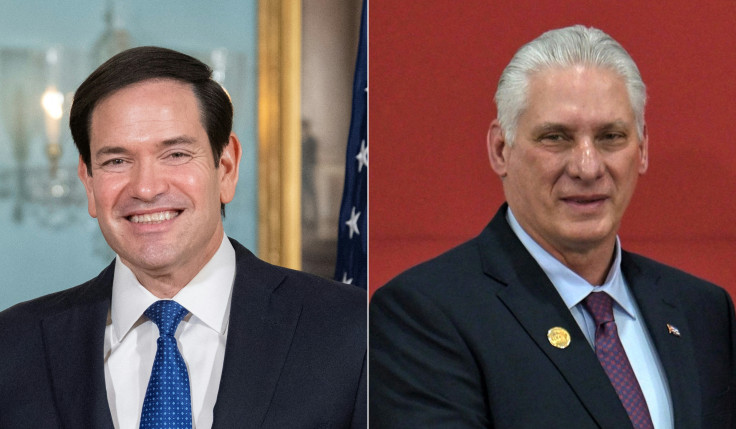
Cuba said Thursday it will accept a $100 million humanitarian aid offer from the United States as the island faces a deepening fuel collapse, widespread blackouts, and growing public frustration in Havana.
Cuban leader Miguel Díaz-Canel said his government would not block the aid if Washington is "truly prepared" to provide it under internationally recognized humanitarian practices, according to the Miami Herald. His statement marked a sharp shift after Cuban officials had previously denied knowledge of the offer and accused Secretary of State Marco Rubio of misrepresenting the situation.
"If the U.S. government is truly prepared to provide aid in the amounts it has announced... it will encounter neither obstacles nor ingratitude on the part of Cuba," Díaz-Canel wrote on X, while also accusing Washington of subjecting Cubans to "collective punishment."
La experiencia de nuestro país en recibir ayuda internacional, incluyendo de EE.UU, es amplia y constructiva. Cualquier donante puede dar fe de esa realidad.
— Miguel Díaz-Canel Bermúdez (@DiazCanelB) May 14, 2026
Si verdaderamente hay disposición del gobierno estadounidense a brindar ayuda en los montos que anuncia y en plena…
The apparent acceptance came after Rubio said the Trump administration had offered $100 million in humanitarian assistance to Cuba, including possible distribution through the Catholic Church and other independent organizations. Rubio discussed the aid delivery with Pope Leo XIV at the Vatican last week.
-
Cuba Hits Record 1,260 Political Prisoners as NGO Alleges Torture and Sexual Abuse

-
Trump Says Cuba Is 'Asking for Help' Signaling Possible Talks With Havana As He Throws Florida Politicians Under the Bus
-
Rubio Highlights Cuba's Economic Potential as Cuba Confirms It Has 'Absolutely Nothing' Left in Fuel Reserves


The timing is critical. Cuba's Energy Minister Vicente de la O Levy said on state television that the country has run out of fuel oil and diesel. "We have absolutely no fuel, we have absolutely no diesel," he said, according to the Miami Herald.
The fuel shortage has pushed Havana into some of its worst rolling blackouts in decades. Reuters reported that protests broke out across the capital Wednesday night, with residents blocking roads with burning trash, banging pots and shouting for electricity after some neighborhoods went more than 40 hours without power.
Díaz-Canel said Cuba's priorities are clear: "fuel, food, and medicines," according to the Miami Herald. But it remains unclear whether the U.S. aid package would include fuel directly, or whether Washington would allow a broader humanitarian exception for energy shipments.
The crisis has worsened since January, when President Donald Trump imposed new pressure on countries supplying fuel to Cuba. Reuters reported that Mexico and Venezuela, once major suppliers to the island, have not sent fuel since Trump threatened tariffs on nations shipping oil to Cuba.
For now, Cuba's acceptance opens a narrow diplomatic channel at a moment when the island is facing economic paralysis, social unrest and an energy system close to collapse. Whether the aid arrives, who distributes it and whether it includes fuel could determine how quickly the crisis eases.
© 2025 Latin Times. All rights reserved. Do not reproduce without permission.


