
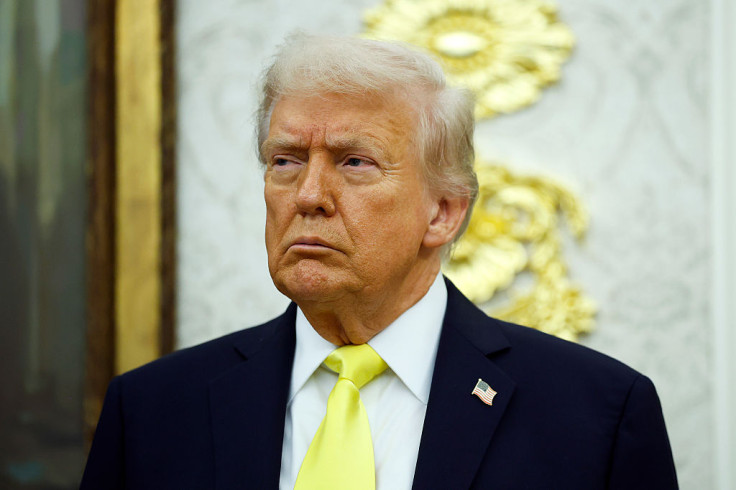
President Donald Trump said that the United States could soon open talks with Cuba after claiming the island nation is "asking for help," signaling a potentially dramatic shift in tone after months of escalating pressure from his administration.
In a post shared on social media, Trump described Cuba as "a failed country" that is "only heading in one direction, down," before adding: "Cuba is asking for help, and we are going to talk!!!!"
He also threw Miami Republican Representatives and Florida Senators under the bus: "No Republican has ever spoken to me about Cuba."
The comments came as Trump departed for a high-stakes trip to China and after weeks of increasingly aggressive rhetoric toward Havana from both the White House and Secretary of State Marco Rubio.
The president did not specify who in the Cuban government had allegedly reached out to Washington, nor did he explain what form any future talks could take. The White House has not yet released additional details.
JUST IN
— Conservative Brief (@ConservBrief) May 12, 2026
President Trump announces Cuba has asked the United States for help - talks incoming! pic.twitter.com/jQnVfC49Vk
Trump's remarks immediately fueled speculation about whether the administration could be preparing a new diplomatic opening, even as it simultaneously tightens sanctions and maintains a hardline posture toward Cuba's communist government.
The administration has spent months ratcheting up pressure on Havana through economic measures, sanctions and threats linked to Cuba's worsening fuel and humanitarian crisis. Earlier this month, Rubio announced new sanctions targeting Cuba's military-linked business network and state-controlled enterprises.


The Trump administration has also faced international criticism over measures widely described as an effective fuel blockade against the island, which has contributed to rolling blackouts, shortages and growing economic instability.
Despite the tough rhetoric, reports in recent days suggested that U.S. officials had quietly floated humanitarian assistance proposals to Cuba, including aid packages tied to political conditions.
Trump has repeatedly escalated his language about Cuba throughout 2026.
In March, he said he believed he would have the "honor" of "taking Cuba," describing the island as a "very weakened nation."
More recently, he joked during a Florida appearance that the U.S. Navy could "take over" Cuba "almost immediately."
Those comments, combined with increased military speculation and the administration's broader regional strategy following Venezuela's political upheaval, have raised concerns among analysts about the possibility of deeper U.S. intervention in the Caribbean.
At the same time, American officials have publicly denied that military action against Cuba is imminent. Associated Press reporting last week said the administration was instead focused on sanctions, diplomacy and humanitarian leverage.
Cuba's economy has deteriorated sharply in recent years, with shortages of fuel, medicine and food triggering mass migration and social unrest. The island has struggled to recover from the combined effects of U.S. sanctions, declining Venezuelan oil support, inflation and a weakened tourism sector.
The decades-long conflict between Washington and Havana remains one of the most politically charged issues in South Florida, where Cuban American voters continue to play a major role in national elections.
Rubio, whose family fled Cuba, has become one of the administration's most outspoken voices on the issue. He recently described the Cuban leadership as "incompetent communists" and defended the administration's pressure campaign as necessary to force political change.
Trump's latest comments are likely to spark intense debate among Cuban Americans, foreign policy experts and lawmakers over whether the administration is preparing negotiations, demanding concessions or simply increasing pressure ahead of another confrontation with Havana.
© 2025 Latin Times. All rights reserved. Do not reproduce without permission.


