
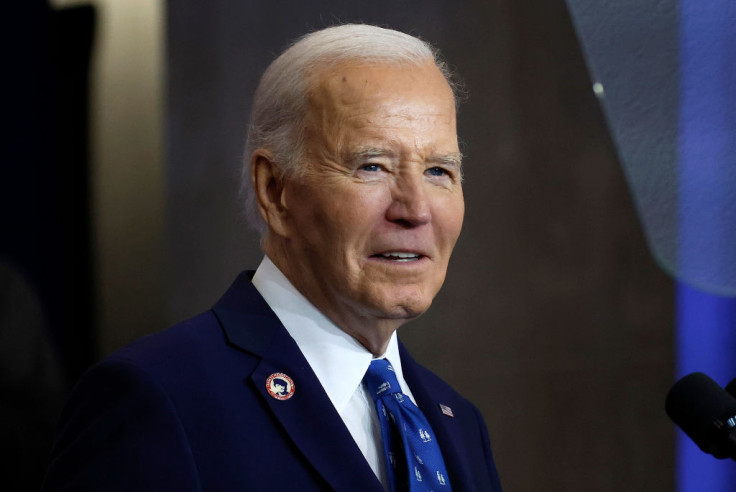
Former President Joe Biden is preparing to fight the Trump administration's effort to release roughly 70 hours of audio recordings from private conversations with his ghostwriter, opening a new front in the long-running legal and political battle over the classified documents investigation that shadowed the final stretch of his presidency.
Justice Department lawyers told a federal judge in Washington that they expect Biden to try to "prevent any such disclosures" of the recordings, according to court papers cited by Politico. The audio includes interviews Biden conducted in 2017 with writer Mark Zwonitzer while working on his memoir 'Promise Me, Dad,' a book about his deceased son Beau Biden. The material was later reviewed by special counsel Robert Hur during his investigation into Biden's handling of classified documents.
The case stems from Freedom of Information Act litigation brought by the conservative Heritage Foundation, which has sought access to records connected to Hur's probe. The DOJ previously told U.S. District Judge Dabney Friedrich that reviewing the recordings would be difficult because the material includes about 70 hours of audio and could contain classified information. DOJ later located six electronic files, totaling 117 pages, that appeared to be verbatim transcripts of a small subset of the Biden-Zwonitzer recordings.
Hur's February 2024 report concluded that "no criminal charges are warranted" against Biden, but it also said investigators found evidence that Biden had retained and disclosed classified materials after leaving the vice presidency. FactCheck.org noted that Hur declined to recommend charges while also faulting Biden for some public claims about the report.
The ghostwriter recordings became one of the most politically sensitive pieces of the investigation because Hur's report said Biden had read from notebooks to Zwonitzer during the book process and that some passages contained classified information.
Zwonitzer worked with Biden on 'Promises to Keep' and 'Promise Me, Dad.' The special counsel also examined Zwonitzer's deletion of some recordings after learning of the federal investigation. Hur did not charge Zwonitzer, citing his cooperation and insufficient evidence of criminal intent.


The dispute also revives an earlier executive privilege fight.
In 2024, the Biden White House blocked the release of audio from Biden's interview with Hur, arguing that Republicans wanted the recordings for political purposes and could use them selectively. AP reported at the time that House committees moved forward with contempt proceedings against Attorney General Merrick Garland after the administration refused to turn over the audio.
The Justice Department has also raised concerns about manipulation of audio in the age of artificial intelligence. In 2024 the DOJ cited the risk of AI-generated deepfakes as one reason to keep Biden's Hur interview recording from being released publicly..
The fight now lands in a different political environment. Trump is back in the White House, Biden is out of office, and the Justice Department is moving under a new administration. That shift makes the case more explosive, because any release of the recordings could reignite debates over Biden's memory, the handling of classified materials and whether the government treats presidents differently depending on party.
The court has not yet ordered a full release of the recordings. But the latest filing makes clear that the tapes remain a legal, political and reputational flashpoint, one that could put Biden back in federal court long after leaving the White House.
© 2025 Latin Times. All rights reserved. Do not reproduce without permission.


