
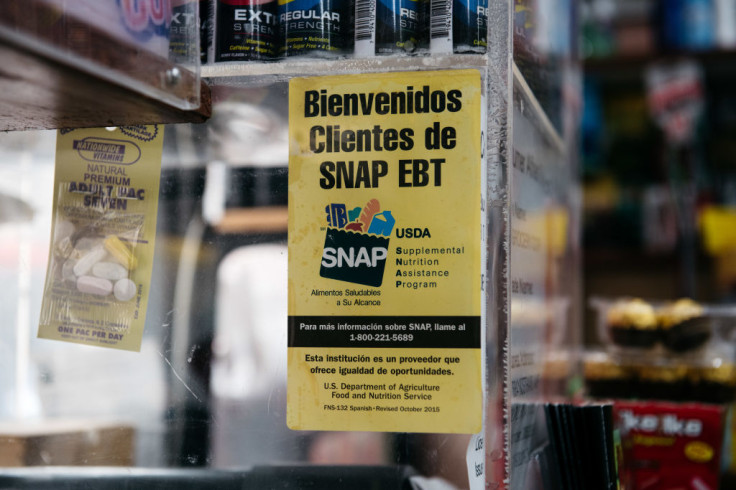
When President Donald Trump signed the "Big, Beautiful Bill" into law in the summer of 2025, the legislation triggered sweeping cuts to the Supplemental Nutrition Assistance Program, imposing new eligibility requirements that left millions of Americans with reduced federal food assistance.
Supporters of the measure argued the cuts would encourage more people to leave public assistance and enter the workforce. But an NBC News investigation found the changes have also left thousands of Americans struggling to afford food as reduced benefits fail to cover basic needs.
Federal data shows that about 3.5 million people nationwide had fallen off SNAP rolls as of January 2026 since the law was enacted. Among the states hit hardest is Arizona, where thousands of residents have lost benefits in recent months and, in some cases, without warning.
"It's been really hard. We've been going to food banks every week," Tiffany Hudson, a part-time caretaker and mother of two, told NBC News. "We're eating less, we're eating more frozen stuff."


The law makes deep cuts to federal funding for food assistance programs while shifting more costs to states. According to an analysis by the nonpartisan Center on Budget and Policy Priorities, most states beginning in 2027 will be required to cover between 5% and 15% of SNAP benefit costs, with the amount tied to payment error rates.
Payment error rates measure whether recipients were paid more or less than the amount for which they qualified. Under the law, states with error rates above 6% will be required to shoulder part of the cost of food stamp benefits, which until last year had been fully funded by the federal government.
Arizona's payment error rate was 8.8% in fiscal year 2024 and is projected to reach about 10% in fiscal year 2025. If the state fails to reduce the rate, it could face as much as $208 million in SNAP-related costs beginning in late 2027, according to a state analysis released in September noted by NBC News.
Experts argue the changes could incentivize states to adopt more aggressive measures to reduce error rates and cut costs, potentially resulting in delayed or improper denials of benefits for eligible recipients.
"It's a frightening time for the folks we serve," Natalie Jayroe, CEO of the Community Food Bank of Southern Arizona, told NBC News. "The overwhelming uncertainty and anxiety that the folks we serve are facing — it's hard to describe."
According to NBC News, the number of Arizonans receiving food stamps had dropped by about 50% as of March compared with a year earlier, including roughly 200,000 children who lost benefits, citing state data.
As SNAP benefits decline, food banks across the state are seeing growing demand for assistance. The White House said the law is intended to reduce federal spending and "restore basic work requirements, prioritize American citizens, and implement reasonable cost-sharing measures with states to crack down on waste, fraud, and abuse."
But critics, including Lauren Bauer, a fellow in economic studies at the Brookings Institution, argue the policies disproportionately harm low-income Americans struggling with rising grocery prices.
"I think it's a really cruel time to be taking grocery money away from low-income people with prices where they are and for reasons that are beyond their control," Bauer said. She described the changes as "a cruel policy to try to use hunger as leverage over people."

© 2025 Latin Times. All rights reserved. Do not reproduce without permission.


