
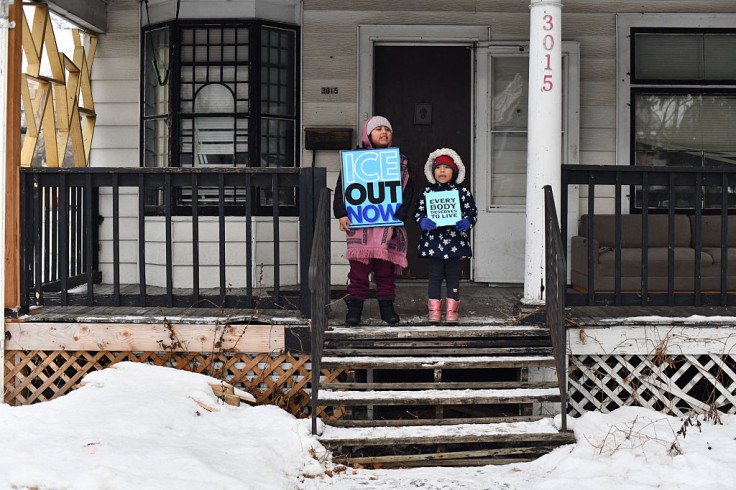
The Trump administration's aggressive crackdown on immigration has had broader effects across parts of the U.S. population. Originally aimed at targeting "the worst of the worst," immigration enforcement officials have at times arrested individuals with no criminal record, with some detentions being challenged in courts nationwide.
The crackdown has also affected children, whether as direct targets of enforcement operations or as witnesses to the arrest of parents or family members, such as in the case of Liam Conejo Ramos.
As noted by The Associated Press, schools across Minnesota are developing new ways to help students cope with that trauma.
In several Minneapolis-area school districts, mental health experts, social workers and teachers are introducing strategies, including the use of emotional support animals, to address the psychological impact on children who witnessed arrests, lost relatives to deportation or endured prolonged anxiety at home.
At Valley View Elementary School in Minneapolis, at least four students were detained and separated from their families and sent to a Texas detention center, according to the AP report.
"What we know about trauma is that our bodies hold on to the fear," social worker Nicole Herje said.
In one session, Herje spoke with kindergartners about emotions, asking what made them happy, sad or angry. When asked what made her sad, one girl responded, "When my grandma, she go (to) Ecuador."
Robyn Tabibi, a family physician in St. Paul, Minnesota, told the AP that symptoms of trauma vary depending on the child's age and experiences. She described treating a 3-year-old who had lost several relatives to deportation and had to move homes with his mother to avoid being targeted.
"He gradually stopped eating, became listless, refused to play anymore," Tabibi said. "He's in this new space, and he is so traumatized."
Other experts say children in mixed-status families "often live with chronic anticipatory anxiety" about the possibility that a loved one could be detained or deported, which can lead to school absences, declining grades and emotional distress.
According to data from the Brookings Institution cited by the AP, about 4.6 million U.S.-citizen children live with a parent who is undocumented or has temporary legal status, and more than 200,000 have had a parent detained or deported during the current Trump administration.
The report estimates that approximately 146,635 American children have experienced the detention of at least one parent during the administration's expanded deportation campaign. More than 22,000 children, researchers found, experienced the detention of all co-resident parents in their household. Roughly 36% of affected children were younger than six years old.
Experts say this could have lasting consequences for the next generation of schoolchildren.
"When a child is experiencing sustained and consistent traumatic experiences where they have lost the sense of basic safety, we see that the brain reorganizes itself for survival, which actually translates to structural anatomical changes in the brain," said Rebecca Parlakian, senior director of programs at early childhood advocacy group Zero to Three.


© 2025 Latin Times. All rights reserved. Do not reproduce without permission.


