
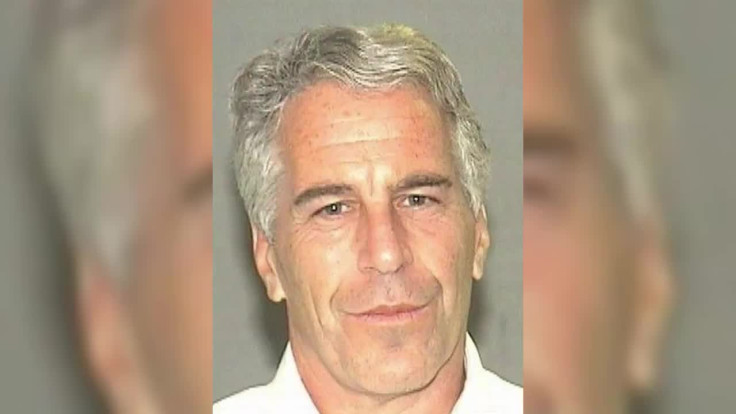
Among the thousands of documents released this year related to the late sex offender Jeffrey Epstein, one set of exchanges resurfaced this week, drawing attention for its connection to a prominent academic accused of sexual misconduct and its implications for federal Title IX policy.
In 2018, Lawrence Krauss, then a professor at Arizona State University, faced a sexual harassment complaint and a Title IX investigation following a BuzzFeed report that accused him of misconduct involving multiple women, including students.
A university report later described incidents involving inappropriate comments, unwanted physical contact and other conduct involving students and staff connected to the Origins Project, an initiative focused on the study of life and the universe that received funding from Epstein and his associates.


According to a Politico investigation, Epstein sought to assist Krauss as the allegations unfolded, communicating with him through text messages, phone calls and emails while offering support as the professor navigated the accusations and his legal response.
Politico reported that Epstein believed policy changes pursued during the first Trump administration could work in Krauss' favor. Those changes focused on Title IX, the federal law that prohibits sex-based discrimination in education, and aimed to expand protections for people accused of misconduct. Epstein suggested those efforts could limit the scope of the investigation and help Krauss retain his position.
"My friends in the White House HATE the title ix c--ts," Epstein wrote to Krauss in an April 2018 message. In another exchange, he added, "Ironic but he might be your out," without clarifying who he was referring to. Krauss responded, "Ironic indeed! But I will take it."
The exchanges have resurfaced as debates continue over the future of Title IX enforcement. During the first Trump administration, then-Education Secretary Betsy DeVos in 2020 replaced prior guidance that had required schools to respond quickly to reports of misconduct. The new rules established a more formal process for handling complaints, including live hearings where both parties could present evidence, call witnesses and challenge testimony.
The changes also narrowed the definition of sexual harassment and allowed schools to adopt a higher standard of proof in disciplinary proceedings compared with earlier Obama-era guidance. Efforts by the Biden administration to revise those rules faced legal challenges, including disputes over provisions related to protections for transgender students.
More recently, the Trump administration has pointed to that legal uncertainty as it moves to advance its own approach, according to Politico.
Although Krauss ultimately did not benefit from the 2020 policy changes, advocates who opposed the rules say the newly released documents reinforce longstanding concerns that the regulations favor those accused of misconduct.
"When Betsy DeVos was secretary of education, the public messaging focused on claims that male students were being falsely accused and that prior policies had created unfair disciplinary processes," Amanda Walsh, a spokesperson for the Victim Rights Law Center, told Politico.
"But when you read these emails, it comes across as a group of well-connected individuals supporting one another," she added.
As legal disputes continue over which version of Title IX should be enforced, advocacy groups representing students who have experienced sexual harassment say the Education Department is falling short in addressing complaints.
In late February, advocacy groups said the department had not resolved any sexual harassment or violence complaints in 2025 and had opened fewer than 10 new sexual violence investigations since March 2025. They also said roughly 90% of complaints received between March and September 2025 were dismissed.
Shiwali Patel, senior director of education justice at the National Women's Law Center, said the emails linked to Epstein underscore criticism of the 2020 rules.
"This further validates concerns that the policy was designed in a way that disadvantages survivors," Patel said.

© 2025 Latin Times. All rights reserved. Do not reproduce without permission.


