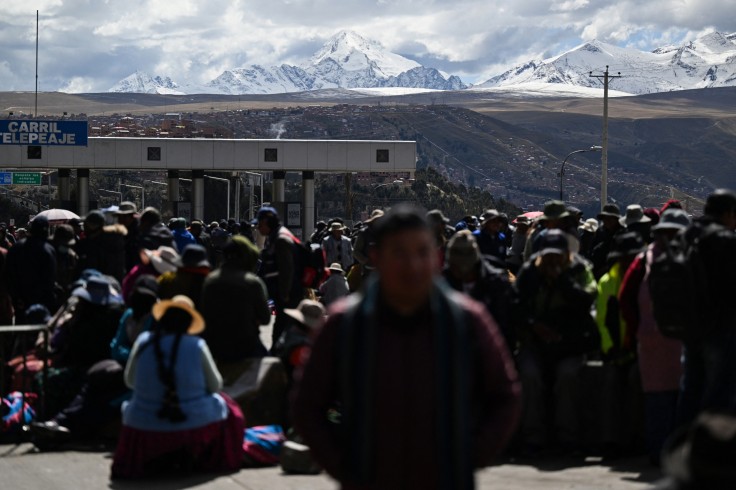
Bolivia's political crisis reached its one-month mark on Friday with no resolution in sight — but a pair of significant developments on May 29 opened, for the first time, a narrow window for negotiations. A court annulled arrest warrants against the country's top union leaders, and the Bolivian Workers' Central (COB) responded by calling an emergency assembly for this Saturday afternoon in El Alto to decide whether to enter formal dialogue with the government of President Rodrigo Paz.
Arrest Warrants Dropped, Dialogue Door Cracks Open
The arrest warrants against COB executive Mario Argollo and Túpac Katari Peasant Federation leader Vicente Salazar were annulled on May 29 by La Paz's Second Anti-Corruption Tribunal, which granted a habeas corpus petition filed by Argollo's defense. The warrants — issued May 17 on charges of incitement — had become the main obstacle to any talks: protest organizations had flatly refused to sit at any negotiating table while their leaders faced arrest. With that condition now met, the COB convoked an emergency national assembly for 2:00 p.m. this Saturday at the Complejo Fabril in El Alto, with the "analysis of the current situation" as its central agenda item — and a possible dialogue with the government on Sunday as the pivotal question on the table.
93 Blockades, Six Departments Paralyzed
The diplomatic opening comes as Bolivia's road network remains paralyzed. According to El Deber, Bolivia's leading lowlands newspaper, 93 blockade points are active across six departments as of this Saturday, with La Paz and Cochabamba the hardest hit at 22 and 21 cut routes respectively. Only Beni, Pando, and Tarija remain unaffected. The three groups leading the blockades are the COB, the Túpac Katari Peasant Federation's Red Ponchos, and coca growers from the Chapare region loyal to former President Evo Morales.
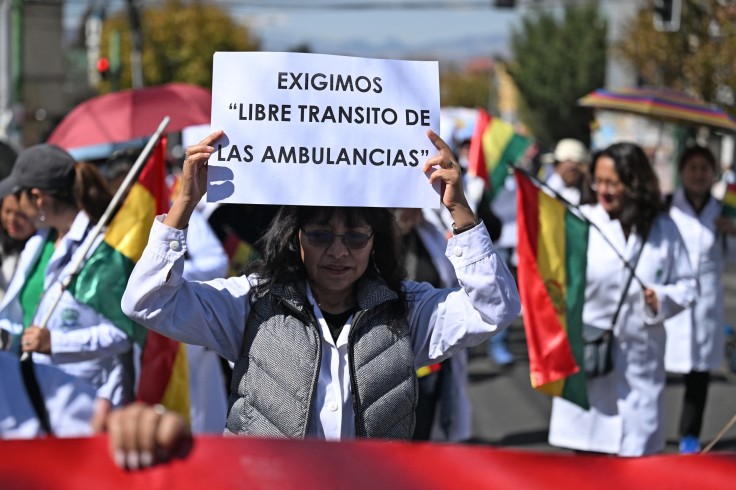
Congress Hands Paz Emergency Powers — Unused So Far
Congress this week passed Law 1731, which repealed the "Eva Copa Law" — a 2020 statute that had required legislative review before any state of emergency and capped such measures at 60 days. The new law was approved by more than a two-thirds majority in both chambers in under 48 hours, restoring the executive branch's authority to deploy the military domestically and simplifying the procedure for declaring a state of emergency. President Paz has not yet declared a state of emergency, nor has he formally ordered the armed forces into the streets to clear blockades — a step that opposition lawmakers warned would "pour gasoline on the flames."
A Government Divided From Within
The crisis has deepened internal fractures within Paz's own coalition. Vice President Edmand Lara — whose grassroots support was arguably decisive in Paz's election victory — has publicly broken with the president, condemning the use of chemical agents against civilians including elderly people and pregnant women. Lara has continued to accuse powerful businessman Samuel Doria Medina of exerting undue influence over the cabinet, particularly through Presidency Minister José Luis Lupo — Doria Medina's former running mate — whom a February presidential decree effectively elevated to the role of de facto vice president. The constitutionality of that decree remains contested.
Breaking: COB Suspends Assembly, Dialogue Thrown Into Limbo
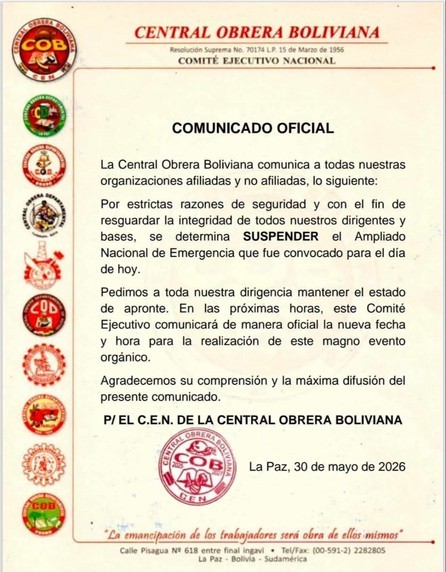
All eyes had turned to El Alto, where the COB's emergency assembly this afternoon was expected to determine whether Bolivia takes its first concrete step toward de-escalation — or whether blockades harden into their second month. A dialogue session mediated by the Catholic Church had been proposed for Sunday. However, in a last-minute development on Saturday May 30, the COB's National Executive Committee issued an official communiqué suspending the emergency assembly scheduled for today. The organization cited strict security reasons and the need to safeguard the integrity of its leaders and rank-and-file members. The COB stated it would announce a new date and time for the assembly in the coming hours, and called on its leadership to remain on alert. The suspension leaves the proposed Sunday dialogue in limbo and extends the uncertainty gripping a country now one full month into its worst political crisis in years.


© 2025 Latin Times. All rights reserved. Do not reproduce without permission.


