
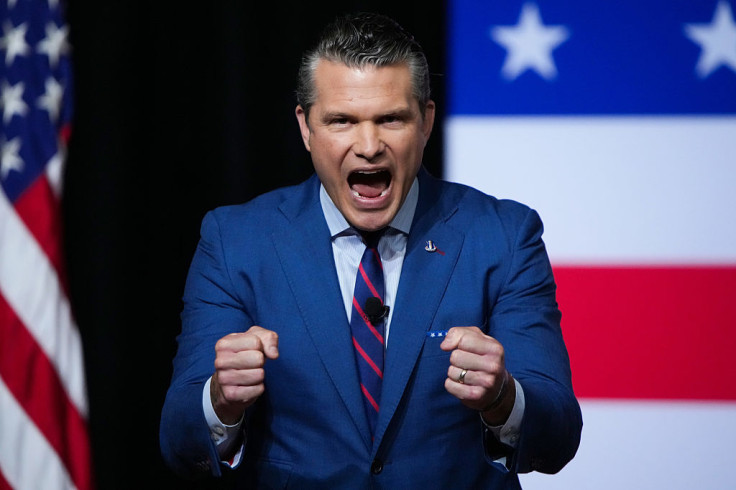
Defense Secretary Pete Hegseth compared members of the press to the biblical Pharisees during a Pentagon briefing on Thursday, accusing journalists of biased coverage of the war in Iran and framing his criticism through a religious analogy that reflects a broader pattern in his public remarks.
Hegseth described what he called an "endless stream of garbage" from the media and questioned reporters' motivations. "Sometimes it's hard to figure out what side some of you are actually on," he said.
Drawing on a church sermon he attended days earlier, he referenced a passage from the Gospel of Mark in which Pharisees observe Jesus healing on the Sabbath. "The Pharisees — the so-called and self-appointed elites of their time — they were there to witness, to write everything down, to report," he said, adding that journalists "are just like these Pharisees."

He argued that coverage of the conflict reflects a "politically motivated animus for President Trump" and said the press "only seek the negative," contrasting that with what he described as public support for U.S. military operations. In a separate account of the remarks, Hegseth said the media's posture was "incredibly unpatriotic" and urged reporters to "open your eyes to the goodness" of U.S. actions.
Hegseth: "A note to the American media. I just can't help but notice the endless stream of garbage, the relentlessly negative coverage you cannot resist peddling despite the historic and important success of this effort and the success of our troops. Sometimes it's hard to figure… pic.twitter.com/dWkV3qpo4a
— Aaron Rupar (@atrupar) April 16, 2026
The comments come as Hegseth has repeatedly clashed with the press over its scrutiny of the administration's handling of the Iran conflict, now in its seventh week and currently under a ceasefire. He has also taken steps to restrict access for some outlets and has criticized coverage as hostile.
His remarks also extend a series of recent instances in which he has incorporated religious language into official settings. Concerns about that approach were raised earlier this month when a Good Friday event at the Pentagon featured a Protestant service without a Catholic observance, prompting questions about religious representation within the department.
Reports also noted that Hegseth has hosted recurring evangelical services inside the Pentagon.
Warnings about the broader implications of such rhetoric had already emerged in a Raw Story report in March in which military chaplains and officials said Hegseth's framing of the Iran war in religious terms could discourage dissent. Retired Army Maj. Gen. Randy Manner said chaplains felt they "can't voice their concerns," while an unnamed Defense Department official described the internal climate as "terrifying."
Critics have also raised constitutional concerns, arguing that overt religious framing in military operations risks undermining protections for religious neutrality. Hegseth has defended his approach as part of a broader shift away from policies he has criticized as ideological, while continuing to position the administration's military actions as both strategic and, at times, moral in tone.
© 2025 Latin Times. All rights reserved. Do not reproduce without permission.


