
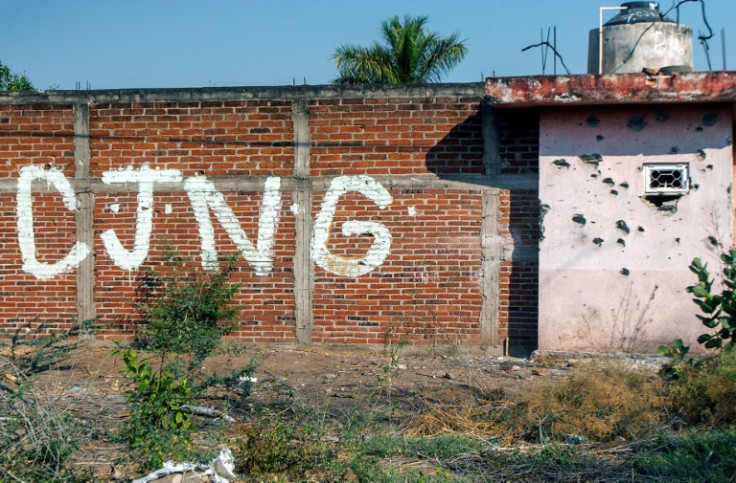
In just over a decade, the Cártel Jalisco Nueva Generación (CJNG) evolved from a regional criminal organization into the most powerful cartel in Mexico, with presence in all 32 states.
Under the leadership of Nemesio Oseguera Cervantes, also known as "El Mencho," the organization millions of dollars through ventures not related to drugs, including a network of front companies disguised as construction firms, cattle businesses, tequila brands, jewelry operations and even hotels.
According to an investigation by Animal Político, one of the key figures behind the cartel's financial growth was Óscar Antonio Álvarez González, who for 11 years served as the CJNG's financial operator.


Despite playing a central role in the cartel, Álvarez González maintained a low profile to evade authorities. It was not until September of last year that he was arrested by members of Mexico's Financial Intelligence Unit (UIF) and other federal forces, who had been tracking him for eight weeks prior to his capture.
As reported by Animal Político, although his arrest occurred during the administration of President Claudia Sheinbaum, Álvarez González and his network of shell companies flourished between 2018 and 2024, during the presidency of Andrés Manuel López Obrador. During that period, he established 45% of the companies he allegedly used to launder money for the Jalisco cartel.
For Álvarez González, the tequila business was a priority. The investigation found that between 2008 and 2022, he registered 31 tequila and mezcal brands under his name.
In the municipalities of Autlán, El Grullo and Tonaya, a region that served as one of El Mencho's main strongholds and operational hubs, Álvarez González created at least nine companies, four of them dedicated to tequila and agave production. Other key nodes in his money-laundering network were located in Guadalajara, where he established 38 corporations, and in Tlaquepaque, where he set up eight companies.
According to the report, the CJNG's financial operator built a complex business structure involving 61 alleged front men, 30 of whom appear only once in corporate records, making it difficult to trace the network back to him.
Another sector Álvarez González allegedly used to launder funds for the CJNG was the jewelry industry, trafficking high-end pieces made from precious metals and stones. The seven jewelry companies linked to the cartel remain active in the import and export of precious metals. By the end of 2024, Mexico recorded $4.2 billion in trade of these goods, according to the most recent official figures from the Economy Ministry. In Jalisco alone, transactions reached $182 million, representing 4.32% of the national total.
But as highlighted by Animal Político, the profits made by the Jalisco cartel tied to this activity may be far greater. In just the past four years, between 2021 when most of the companies were established and 2024, Jalisco's trade balance in this sector totaled $333.5 million.

© 2025 Latin Times. All rights reserved. Do not reproduce without permission.


