
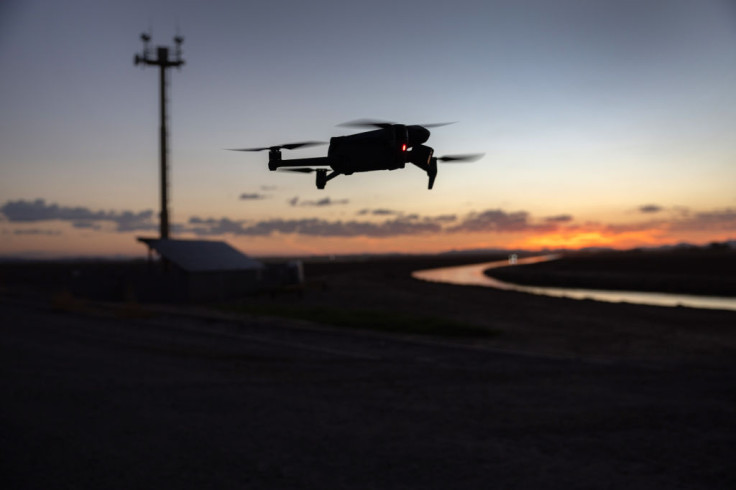
After weeks of uncertainty within the Jalisco New Generation Cartel (CJNG) following the death of its leader Nemesio "El Mencho" Oseguera Cervantes, residents in Michoacán have reported a renewed presence of drones along the state's coast.
As reported by Mexican outlet Proceso, people in coastal areas of Michoacán say they have faced attacks for several days and accuse authorities of failing to respond to criminal groups operating in the region.
According to the outlet and reports shared by residents on social media, people in Laguna de Calvillo, El Puerto, El Ranchual and El Salitro de Estopila have documented explosive attacks for eight consecutive days without intervention from local or state authorities.
"These acts represent a serious threat to public safety, generating fear, displacement, and vulnerability among families living in these communities," the Colectivo de Defensa de Derechos Humanos y Territorio (CODDHHT) and local residents said in a joint statement, also calling for an investigation to identify and punish those responsible and for measures to guarantee the safety of affected communities.


When the CJNG first began asserting control over the region, attacks relied primarily on firearms, but in recent years the cartel has escalated its tactics, employing explosive drones and land mines to isolate and intimidate local communities.
As noted by Proceso, Indigenous communities in the municipality of Chinicuila, in Michoacán's Sierra-Costa region, are among the areas hardest hit by the Jalisco cartel, with residents enduring ongoing attacks from CJNG members over the past three years.
In recent years, Mexican cartels have significantly increased their use of drones in criminal operations. According to a report published last year by the Ministry of National Defense, drug cartels use drones because they are difficult to detect, relatively inexpensive, capable of precise navigation and subject to limited regulations from the government.
According to El Informador, a Jalisco based outlet, the Defense Ministry has identified the main criminal groups using drones as the CJNG, Cárteles Unidos and the Santa Rosa de Lima cartel, all of which operate in Jalisco, Michoacán and Guanajuato.
As noted by a study conducted in late 2025, drone attacks in Mexico more than doubled in 2024 compared with the previous year. The report noted that Mexico recorded 77 drone attacks in 2024, compared with 35 in 2023. Henry Ziemer, an associate fellow for the Americas Program at the Center for Strategic and International Studies, said that cartels are buying signal jammers to protect themselves from attacks by rival factions.
"Mexico has been at the leading edge of illicit drone use not just as a weapon against the state and rivals, but also as a means of intimidating and pressuring the civilian population," the expert added.


© 2025 Latin Times. All rights reserved. Do not reproduce without permission.


